Hemanth Vishnu Advisory

South Korea ISMS readiness

Bring your security-management work, evidence and responsibilities together for South Korea ISMS preparation, with the right local expertise involved from the start.

Give your preparation a clear foundation

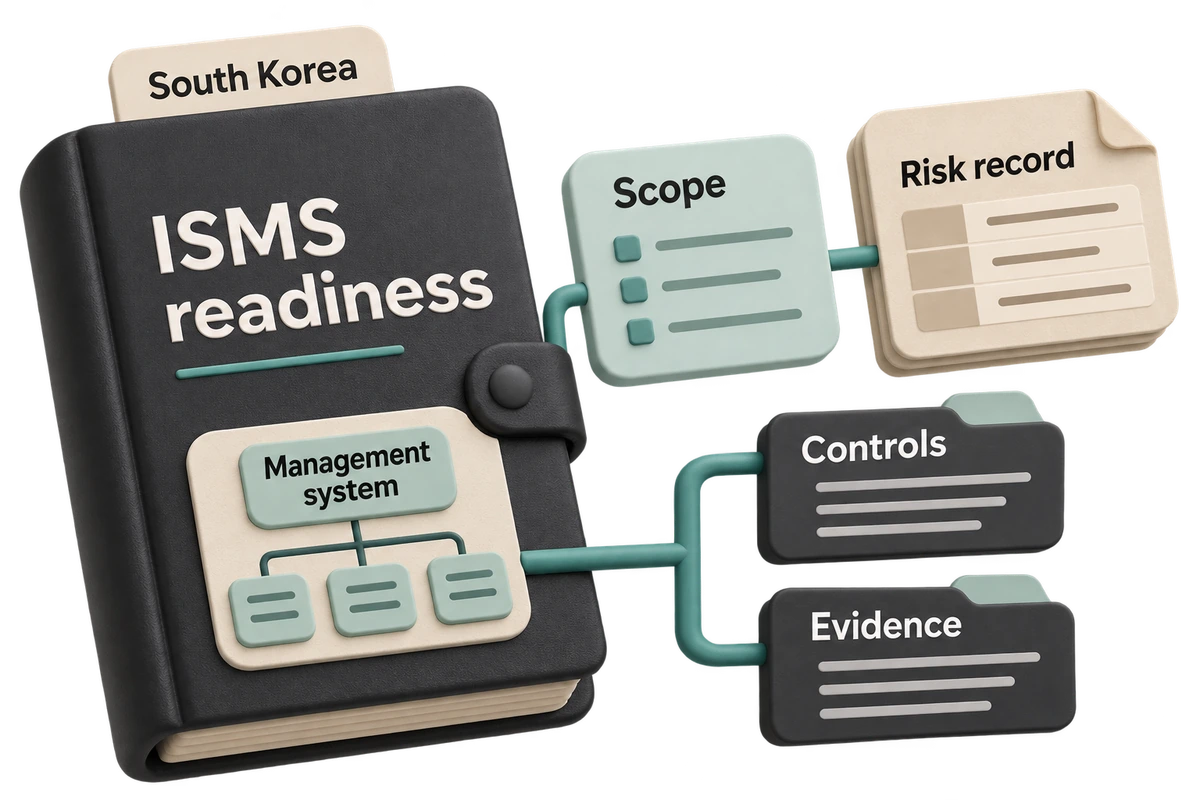
ISMS preparation brings management decisions, working controls and operating records into the same picture. It needs a defined scope and input from the people who own the business processes and systems.

The service reviews what is already in place, makes the gaps clear and organises the work still needed. Local advisers and the relevant assessment route are involved around the confirmed requirement.

This service can help when:

  • Your organisation needs to clarify an ISMS requirement in South Korea
  • Policies, risk records and technical evidence are spread across different owners
  • You need a practical view of the gaps and work still required
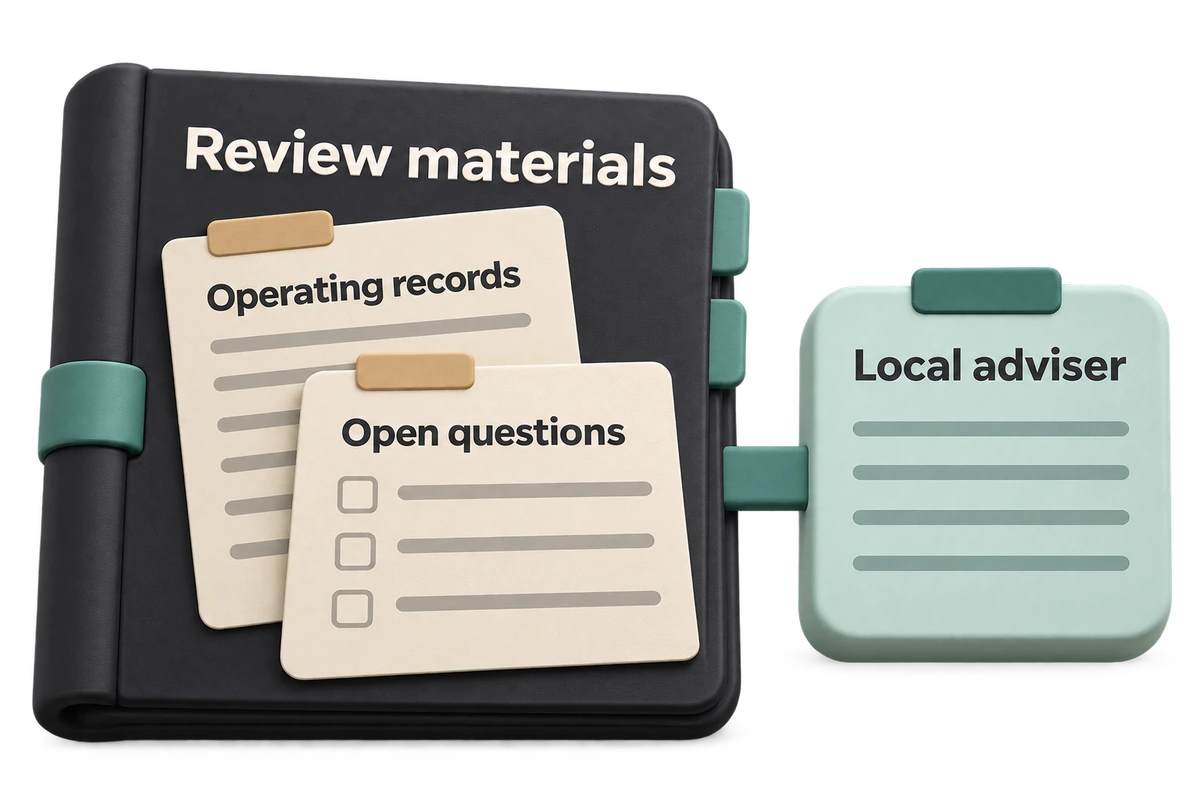
  • Local advisers and assessment contacts need an organised set of review materials

Bring the management system into focus

Define the scope before building the records

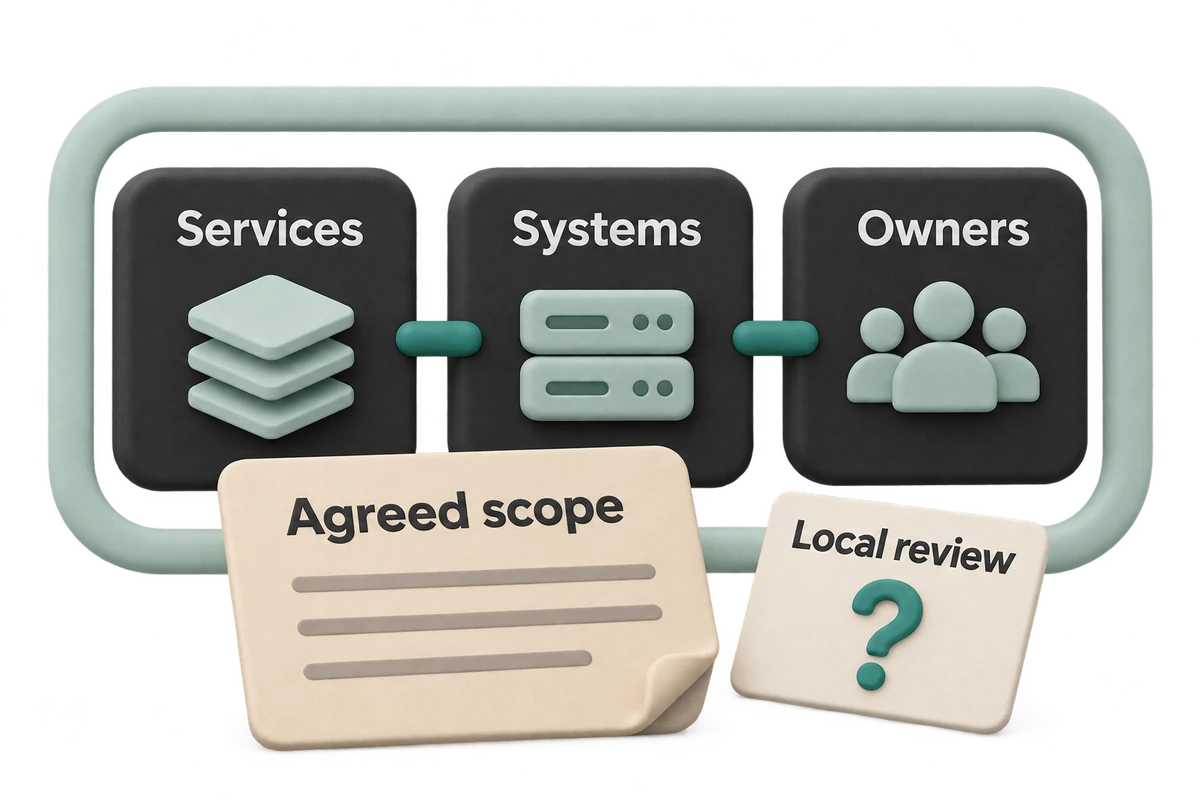
Clarify the business activities, services and systems involved, including the people, locations and providers that support them. Work with your local adviser to establish the applicable requirement and intended certification route before agreeing the preparation.

Record the boundary, criteria and responsibilities in one place. Identify questions about legal applicability, language, specialist input and the assessment process early, so policies and evidence are prepared for the right scope.
Map requirements to working evidence

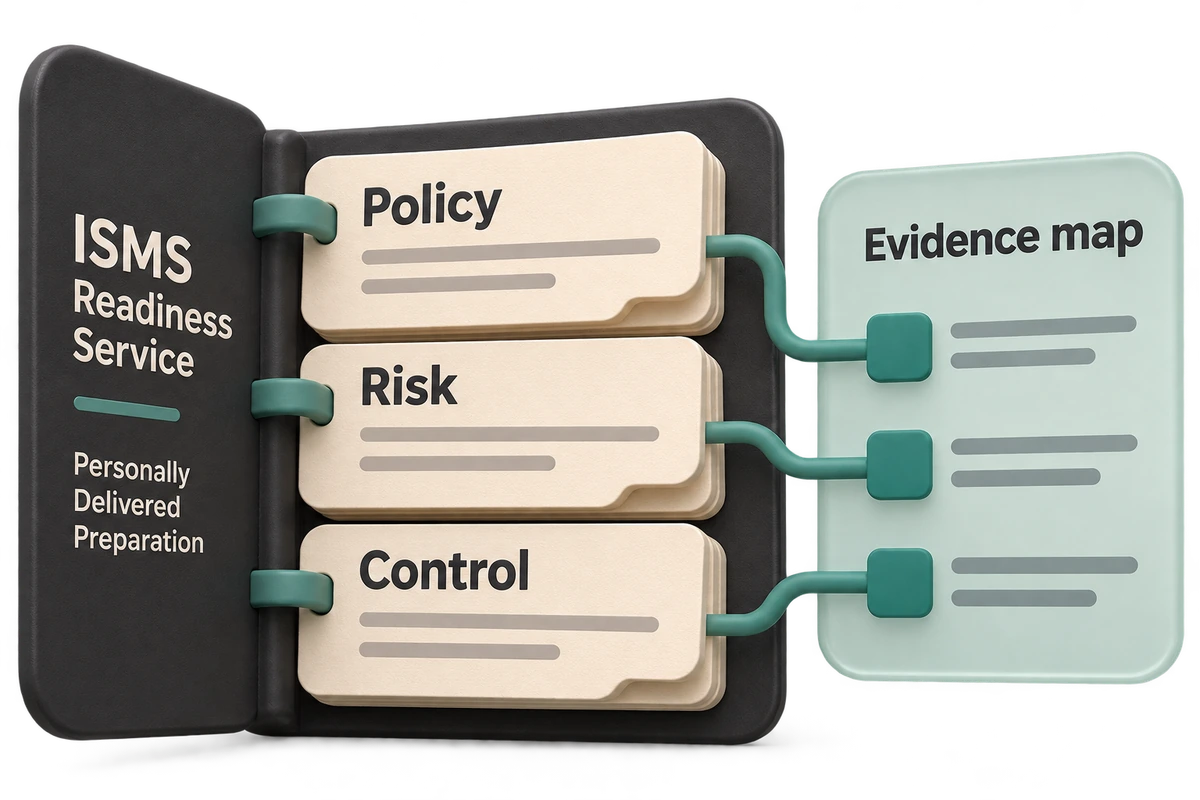
Review the policies, asset information, risk assessments, treatment decisions and management-review records already in place. Map them to the agreed ISMS criteria and identify where the documented approach needs clearer ownership or evidence of use.

Review supporting control records with the relevant owners. Coverage can include account permissions, suppliers, system operations, incident arrangements and recovery, as agreed for your environment. Link each finding to its evidence and distinguish missing records from confirmed control gaps.

Make the improvement work manageable

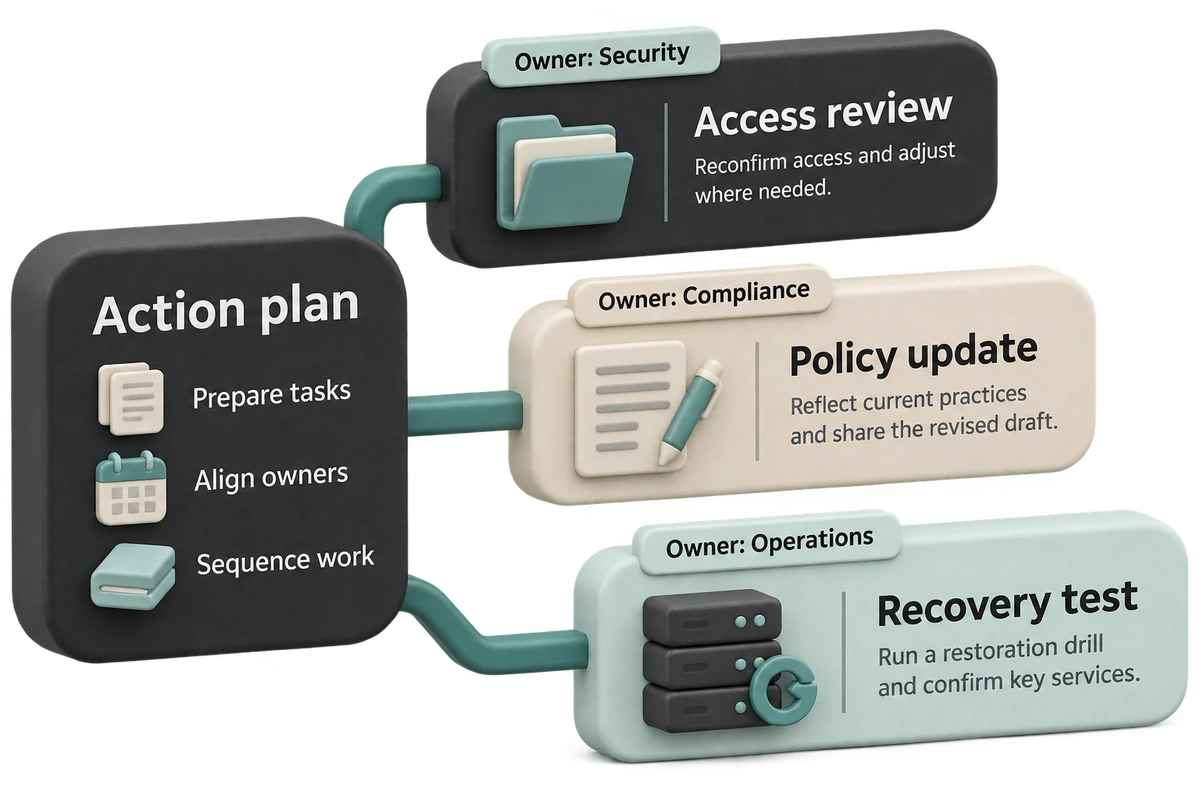
Turn the findings into prioritised actions with owners, dependencies and agreed review points. Separate policy and process changes from technical work, and make clear which decisions require management approval or local specialist input.

Coordinate the improvements included in the engagement with your business and IT owners. Agree access and approvals before changes, then record the work and follow-up evidence reviewed. Outstanding gaps remain visible alongside completed actions.

Prepare the materials for a useful review

Organise the scoped readiness summary, evidence index and supporting records so your organisation and local specialists can review them together. Show what the records support, where evidence is still needed and which questions have an assigned owner.

Prepare the agreed materials and track queries for the relevant adviser or assessment body. Keep technical preparation separate from local legal interpretation, Korean-language work and certification decisions, with responsibilities agreed before handover.

Clear records for the decisions ahead

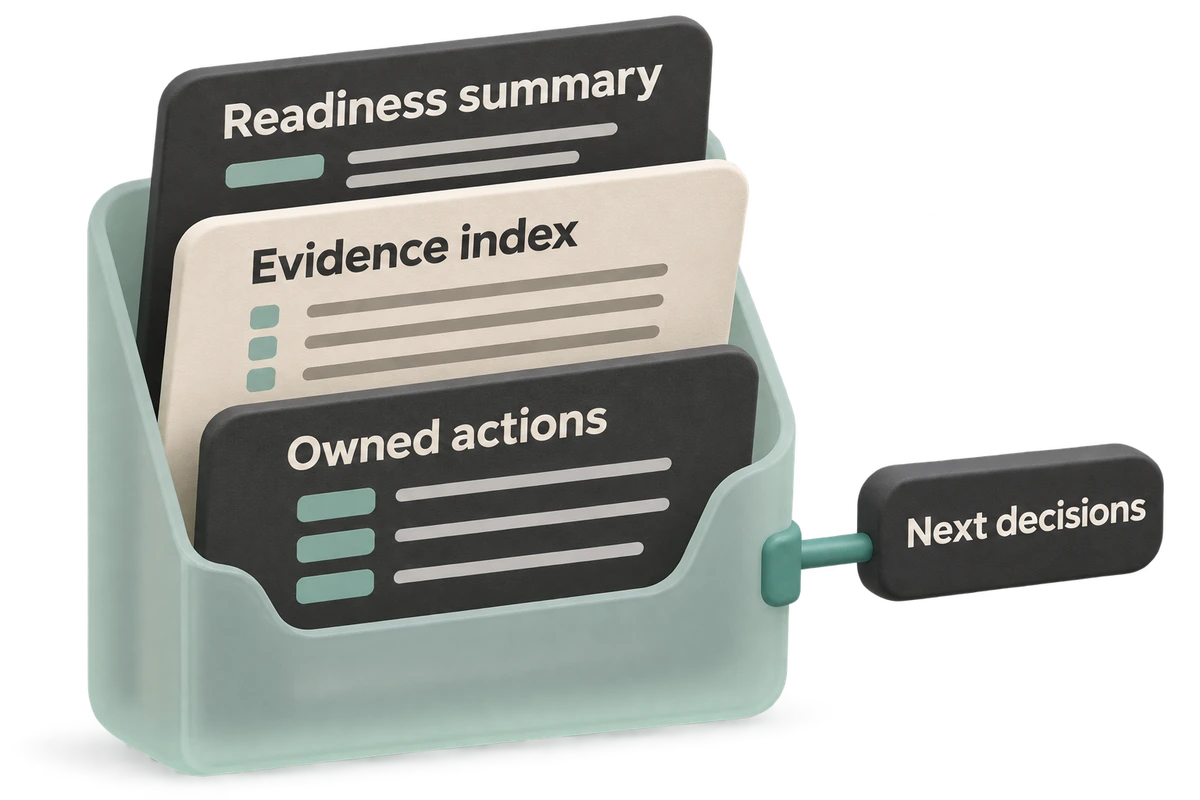
Receive a scoped readiness summary, evidence index and assigned actions, with the agreed review materials brought together.

A scoped readiness summary
The agreed services, systems and criteria, with supported findings, evidence gaps and local dependencies clearly recorded.
A traceable evidence index
Policies, risk records and operating evidence mapped to the requirements they support, with owners and open requests identified.
An assigned improvement plan
Prioritised actions, approvals and dependencies, with completed work and remaining gaps visible.
Organised review materials
The agreed preparation records and a question log for local advisers or the assessment body, ready for your organisation’s review.

The handover makes the current position, remaining improvements and local questions easy to follow.

Clear responsibilities from the start

How do we know whether ISMS applies?

Applicability depends on the organisation and its activities. Start by confirming the requirement with an appropriate local adviser, including whether the intended route is mandatory or voluntary and what the proposed scope needs to cover.

The readiness work records that confirmed basis and the questions still open. Legal applicability is resolved with local expertise before the organisation relies on a particular interpretation.

What is the difference between ISMS and ISMS-P?

KISA distinguishes information-security management certification, ISMS, from the combined information-security and personal-information protection certification, ISMS-P. Its published criteria cover management-system establishment and operation, security measures and, for ISMS-P, additional personal-information processing requirements.

This service is scoped for South Korea ISMS readiness. Any ISMS-P work needs a separately confirmed scope, the relevant privacy expertise and an agreed preparation and assessment route.

Can we reuse our ISO 27001 work?

Existing policies, risk records and control evidence can provide a useful starting point when they cover the services and systems being reviewed. Their relevance and currency still need to be checked against the agreed Korean ISMS criteria.

ISO 27001 certification does not by itself establish Korean ISMS certification. The evidence mapping shows what can be reused, what needs adapting and which requirements need further work.

Can you help with the improvements as well?

Yes. The engagement can include coordinating agreed policy, process and technical improvements with the relevant control owners. The scope defines the tasks, the people carrying them out, access requirements and approvals.

The action register records the work and evidence reviewed. A planned change stays an outstanding action until the relevant work and follow-up have been completed and reviewed.

Does the service include certification?

Hemanth supports preparation, evidence review and agreed improvements. Certification follows the appropriate independent assessment and certification process; HVA does not issue an ISMS certificate or decide whether your organisation will receive one.

Confirm the chosen route, current requirements, application materials and assessment arrangements with the relevant body. Your organisation approves its submissions and retains responsibility for the management system it operates.

What needs a local adviser or specialist?

Local legal applicability, Korean-language interpretation and any required specialist assessment input are arranged with the appropriate expertise. Identify the responsible adviser or body and the questions they need to resolve during scoping.

The readiness work coordinates those dependencies with your internal owners. Translation, legal advice, independent testing and formal assessment are included only where separately and explicitly arranged with suitable specialists.

How will we work together?

You work directly with Hemanth. Remote delivery is the default, with working overlap, access, evidence-sharing arrangements and review points agreed with your organisation.

Your business and technical owners provide the relevant input, and local advisers handle the matters requiring their expertise. Confirm any location, data-sharing or access restrictions before records are exchanged. Continuing management-system upkeep is scoped separately.

Let’s bring your ISMS preparation together

Talk through the requirement, current records and local dependencies, then agree the preparation you need.