Hemanth Vishnu Advisory

Make security priorities clear

Understand the risks in your systems and ways of working, then turn the findings into a prioritised plan and agreed improvements.

See what needs attention

Security advice is most useful when it connects the technical detail with the way your business operates. A selected review can help explain a concern, identify gaps and make the next decision clearer.

The engagement can address one issue or organise a wider programme of improvements. The starting point is your business context, the information it handles and the areas you want to understand.

This service can help when:

  • Security concerns are building up and you need to know where to start
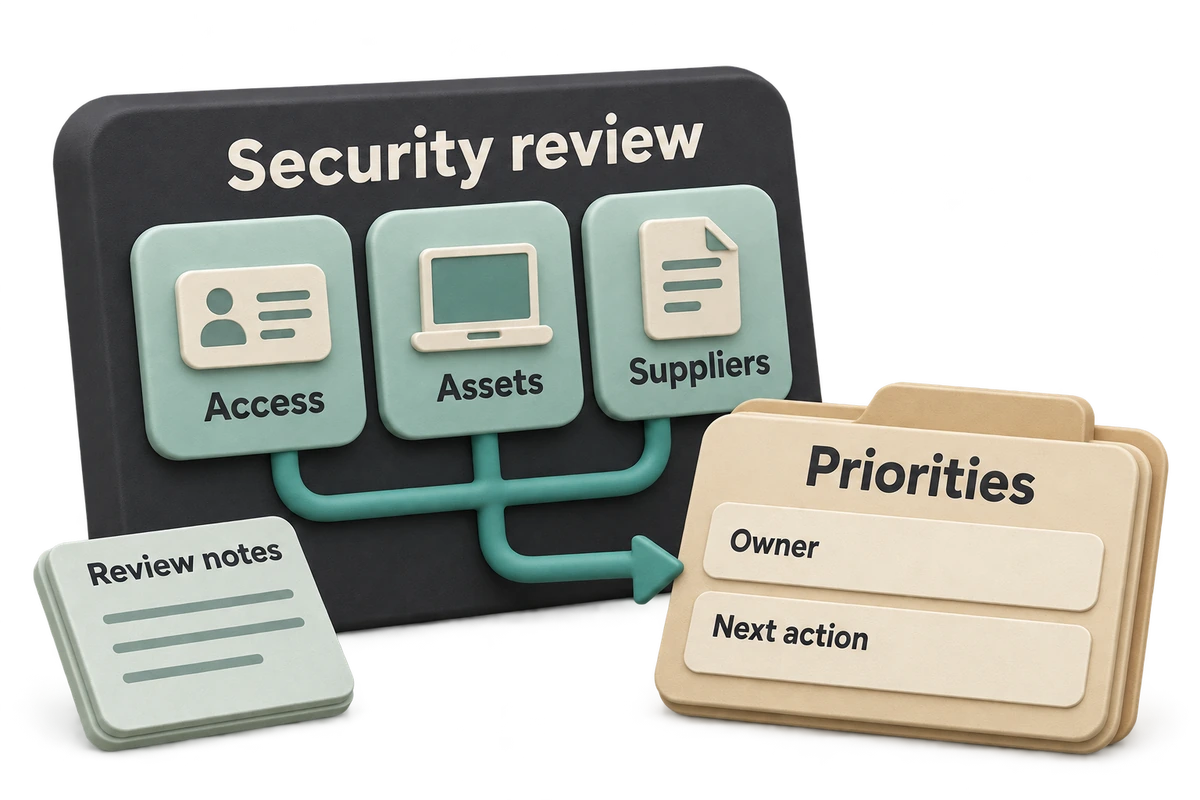
  • Access, assets or supplier responsibilities need a closer review
  • Policies and risk records no longer reflect how the business works
  • You need a practical plan that staff and your IT provider can act on

Practical security support

Understand what is in place

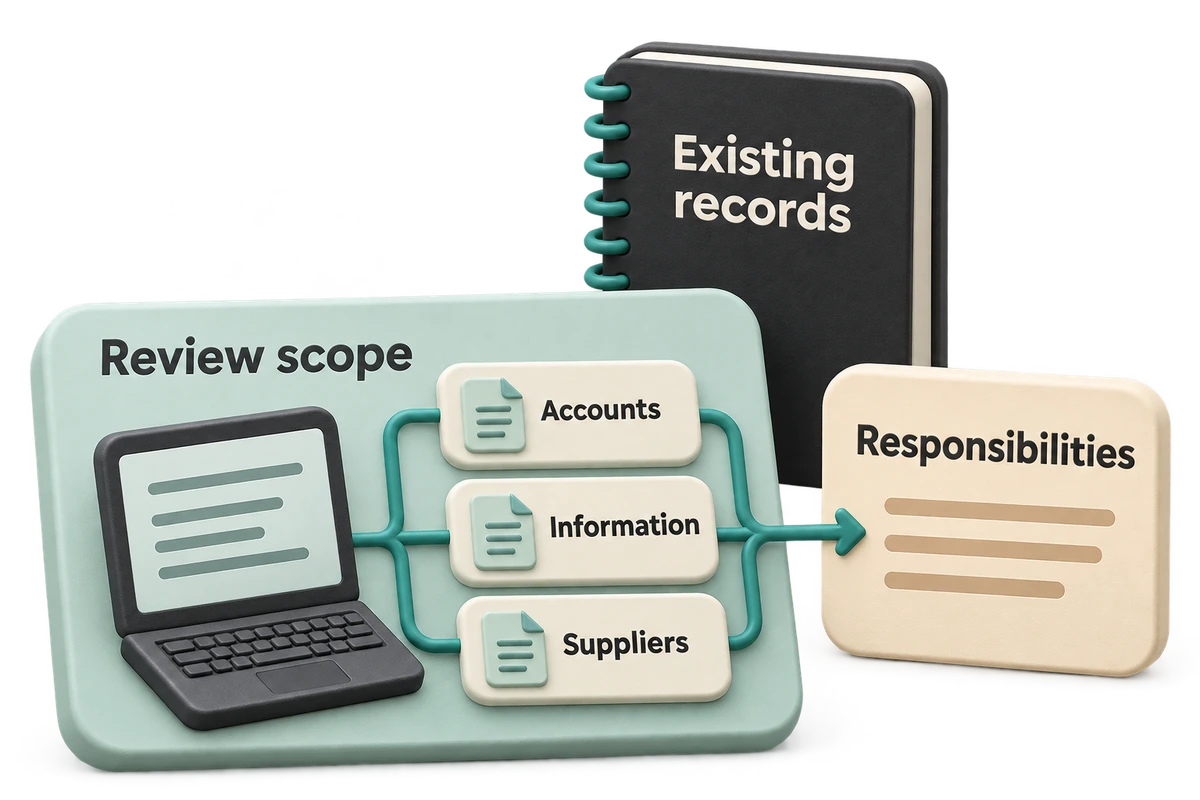
Start with the business activity and information you want to protect. Review the selected systems, processes, responsibilities and security records to understand how they work together.

Depending on scope, this can include accounts and administrative access, important assets, supplier arrangements, staff practices and incident preparedness. Bring the available evidence together and distinguish confirmed findings from questions that need more investigation.
Decide what needs attention

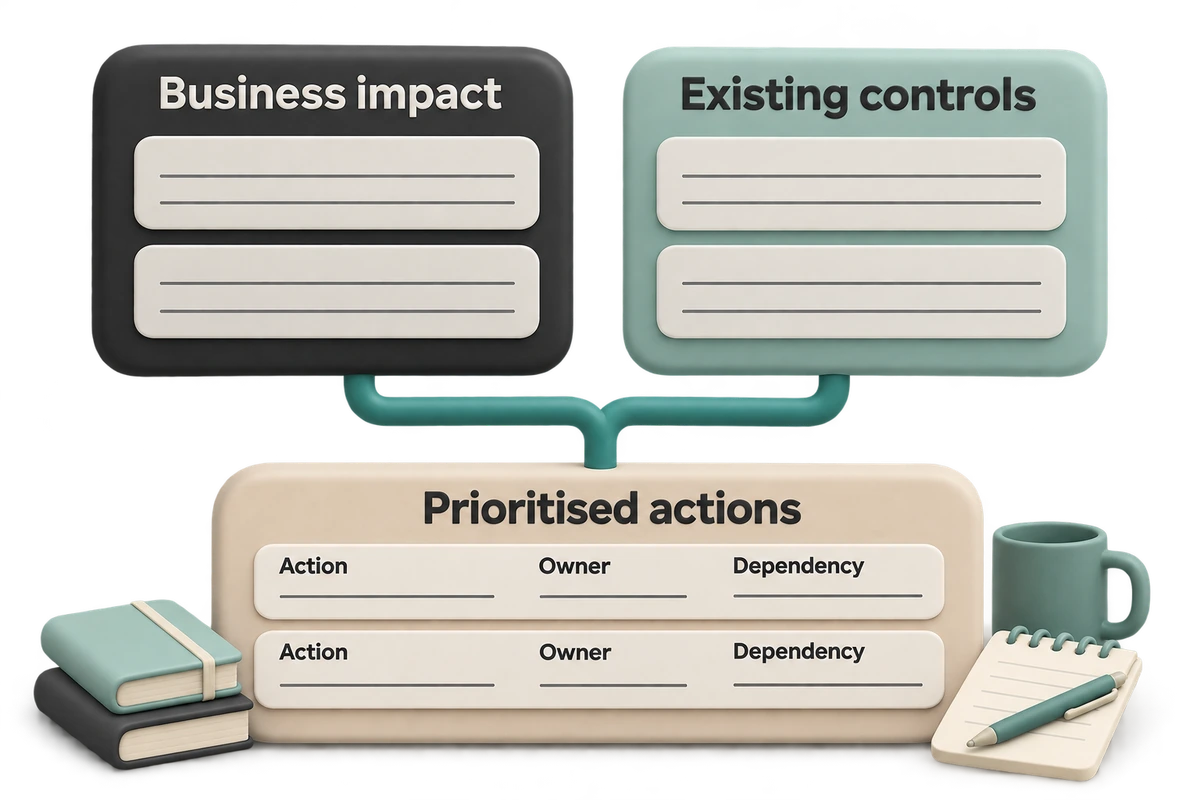
Put the findings into business context. Explain what could be affected, which protections already exist and where a gap or unclear responsibility needs a decision.

Agree priorities around the importance of the information and service, the consequences of disruption or misuse, and the dependencies involved in making changes. The result is a reasoned order of work, with ownership and unresolved questions visible.

Turn decisions into usable records

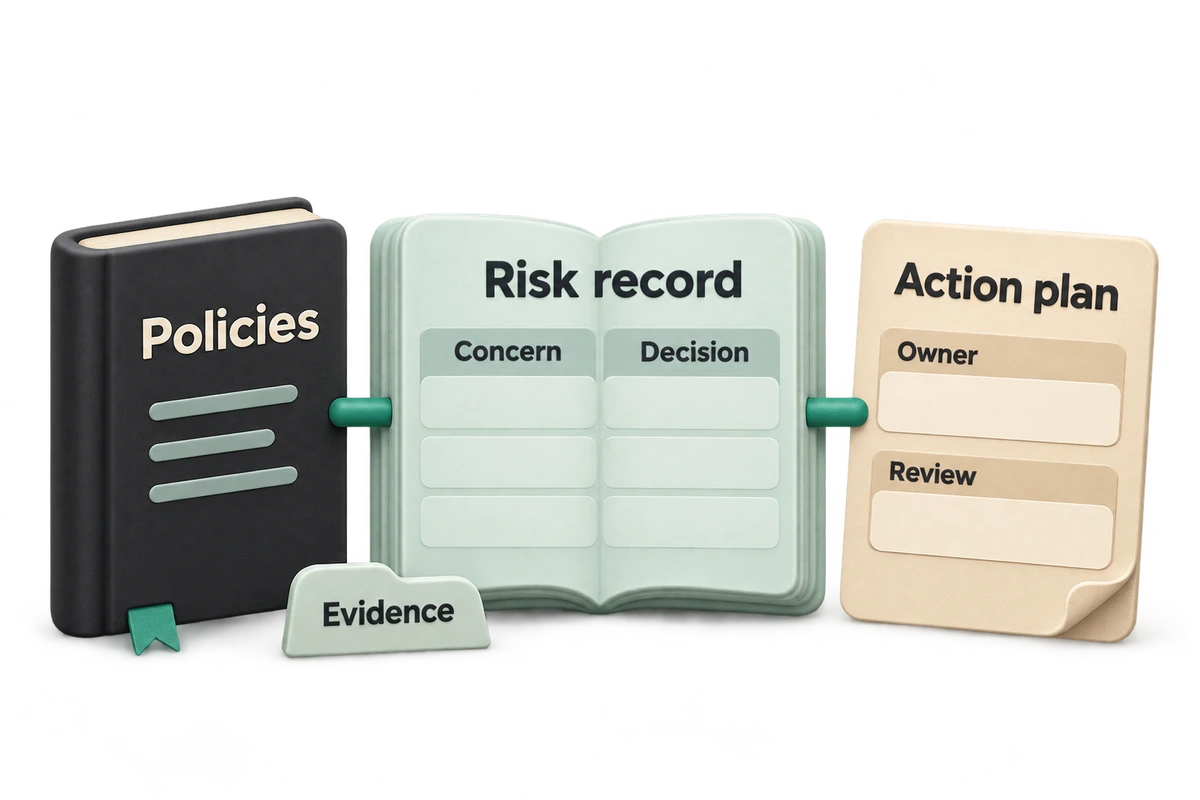
Develop or improve the policies, risk records and action plan needed for the agreed work. Connect each concern to a decision, an owner and a practical next action.

Keep the documentation proportionate to the business. Policies should describe the intended way of working; risk records should show what needs a decision; the action plan should make clear who is responsible and what information or support they need.

Carry agreed improvements through

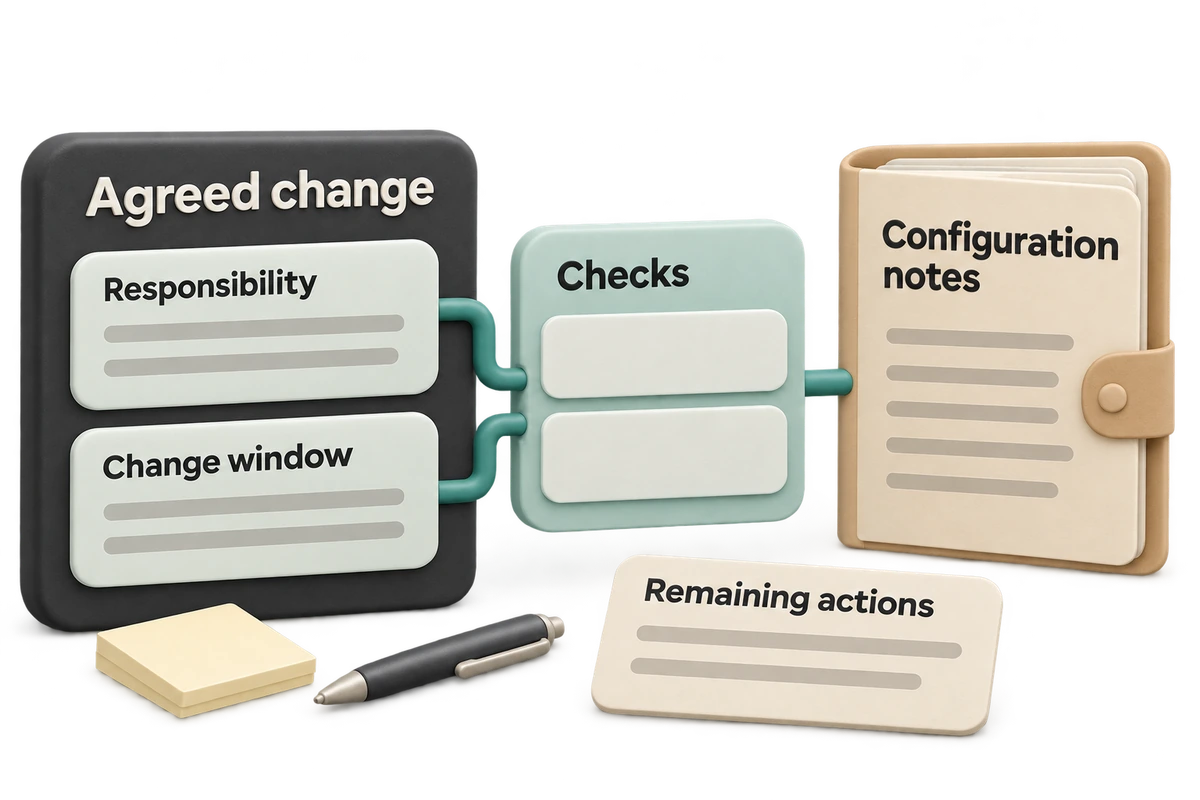
Coordinate improvements with the people responsible for your systems and operations. Where the scope includes technical changes, agree the work, access, approvals and change arrangements before implementation.

Review the result through proportionate checks and document what changed. Record remaining actions, dependencies and any decisions still needed, so your staff or IT provider can continue the work with a clear handover.

Leave with a plan you can act on

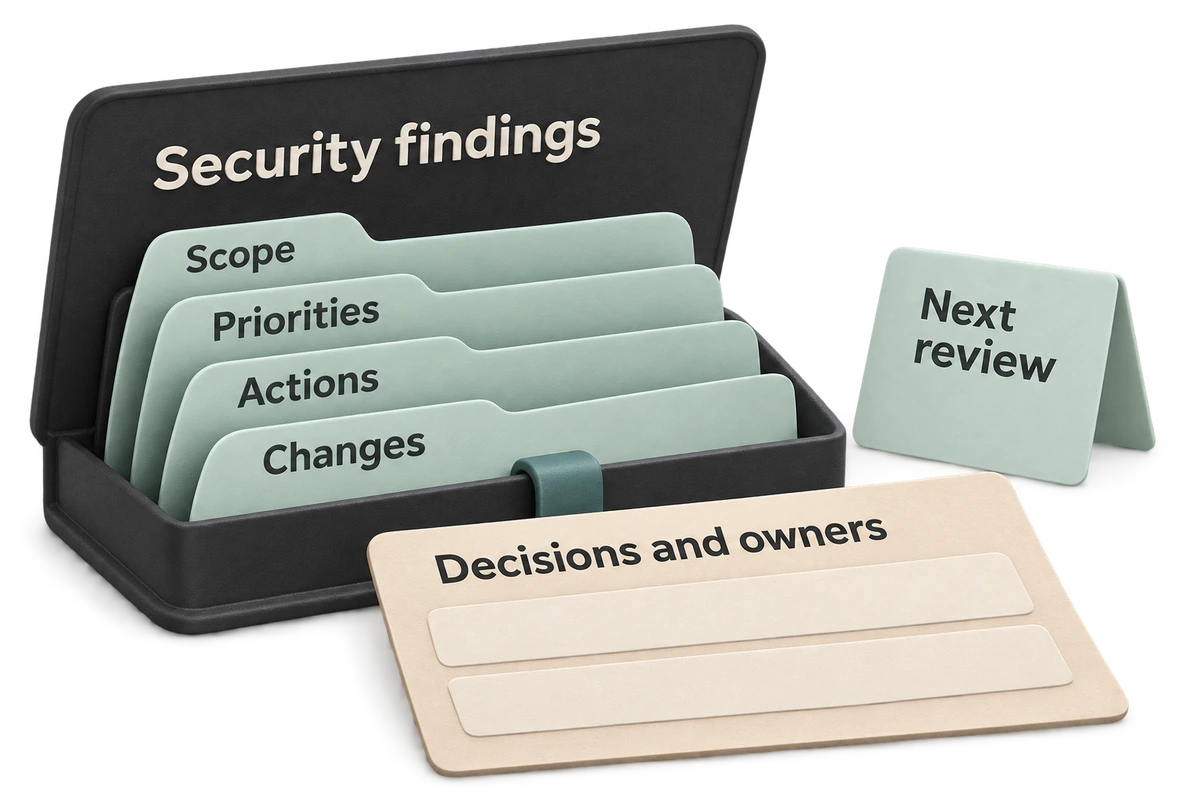
Receive the agreed findings, records and actions in a form your business can use to make decisions and carry the work forward.

A clear view of the findings
The reviewed areas, relevant evidence, security concerns and information still needed, with the limits of the review made clear.
Priorities connected to decisions
A reasoned view of what needs attention, the business implications and the decisions management needs to make.
Records people can work with
The agreed policies, risk records and action plan, with owners, dependencies and follow-up needs identified.
A handover for the next step
A record of agreed improvements, changes and checks completed within scope, alongside the work still outstanding.

The handover keeps completed work, open questions and decisions awaiting approval distinct.

Clear responsibilities from the start

Can we start with one security concern?

Yes. The work can focus on a defined concern, such as unclear administrative access, supplier responsibilities or security records that need updating. It can also help organise a wider security programme.

The scope identifies the question to answer, the areas to review and the outputs you need. A focused review can reveal dependencies or further questions; these are discussed before additional work is agreed.

What will the review cover?

The selected systems, processes, people and records are agreed at the start. Coverage may include access, assets, suppliers, staff practices and incident preparedness, depending on the concern and the business context.

Review depth and any testing are specified in advance. Findings describe what was examined and the evidence available, so you can understand both the conclusions and the areas that need further investigation.

Can you make improvements as well as recommend them?

Yes. The approved service includes coordinating agreed improvements with your staff and IT provider, with technical changes where included in the engagement.

Implementation depends on the environment, access, approvals and change arrangements agreed for the work. The handover records the changes made, proportionate checks and any remaining actions.

How does this differ from ISO 27001 or Cyber Essentials?

Security advisory starts with the concern or improvement your business needs to address. It can be useful without committing to a particular certification programme.

ISO 27001 support focuses on establishing or maintaining an information security management system. Cyber Essentials readiness focuses on the scheme’s requirements and preparation for independent assessment. If either is your objective, the engagement can be scoped around that service.

What information and access will you need?

The starting point is the selected environment, the people responsible for it and the security documentation you already have. Useful inputs may include asset and account records, policies, supplier information and existing findings.

The engagement agrees what information or system access is necessary, who can approve it and how the review or changes will be carried out. Gaps in the available information are recorded and followed up with the relevant owner.

Does this include testing or live incident response?

Any testing needs an agreed purpose, scope and suitable method before it starts. Reviewing records and arrangements does not establish that a penetration test or continuous monitoring service has taken place.

Live incident response, continuous monitoring and specialist penetration testing require a separate suitable service. Incident preparedness within this engagement concerns the arrangements, responsibilities and improvement needs agreed for review.

How will we work together?

You work directly with Hemanth. Remote delivery is the default, with meetings, working overlap and review points agreed around the engagement.

Your organisation retains ownership of security decisions, approvals and responsibilities. The scope sets out the review, documentation and improvements included, along with any work owned by staff, your IT provider or a separate specialist.

Let’s put your priorities in order

Talk through your security concerns and agree a practical next step.