Hemanth Vishnu Advisory

Put AI governance into everyday work

Establish or maintain your AI management system, with ISO 42001 support for scope, responsibilities, risk and impact reviews, and ongoing oversight.

Bring your AI use into view

An AI management system (AIMS) connects the organisation’s AI uses with policies, responsibilities and review activities. ISO/IEC 42001 provides a structure for establishing and maintaining that system.

The work can help create a new AIMS, organise existing AI governance or maintain an established system as uses, suppliers and information needs change.

This service can help when:

  • AI use is growing and responsibilities or decision boundaries need clarifying
  • You need a structured starting point for ISO 42001 and an AI management system
  • AI policies, risk and impact records need bringing together
  • Supplier changes, information use or human oversight need a clearer review process

Practical ISO 42001 support

Define AI uses and responsibilities

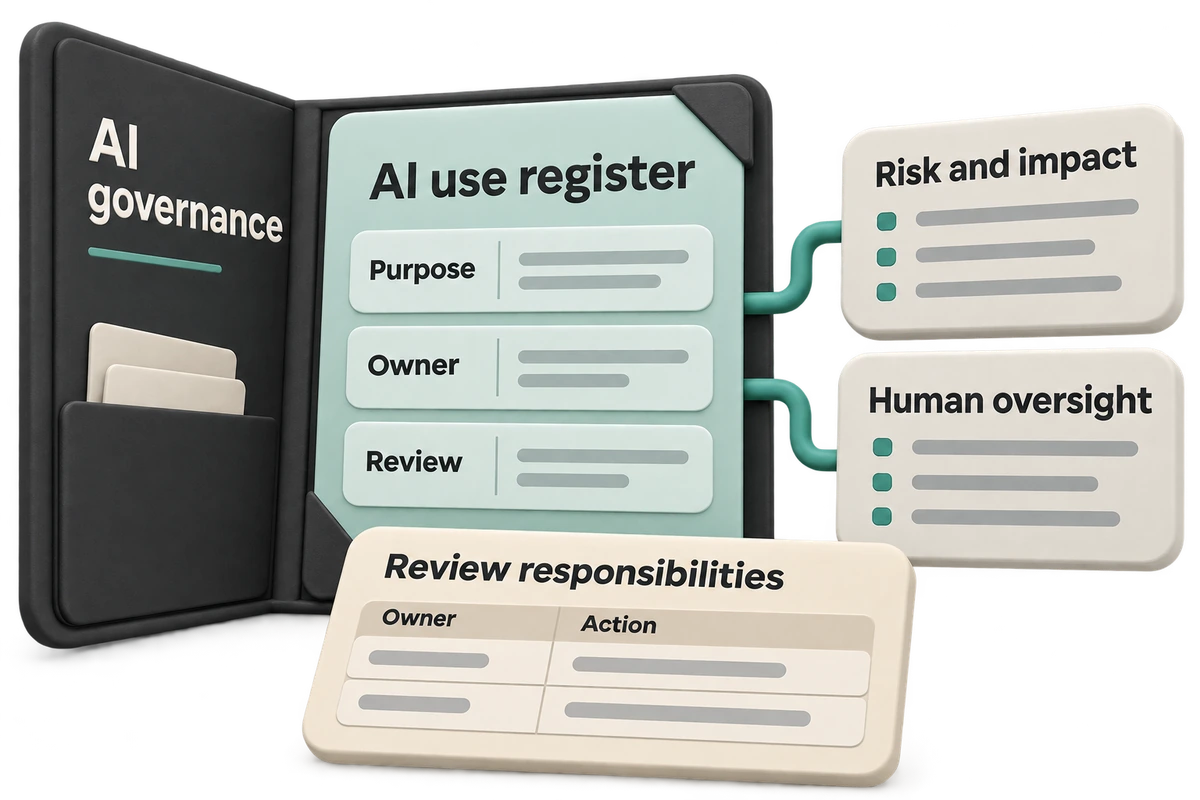
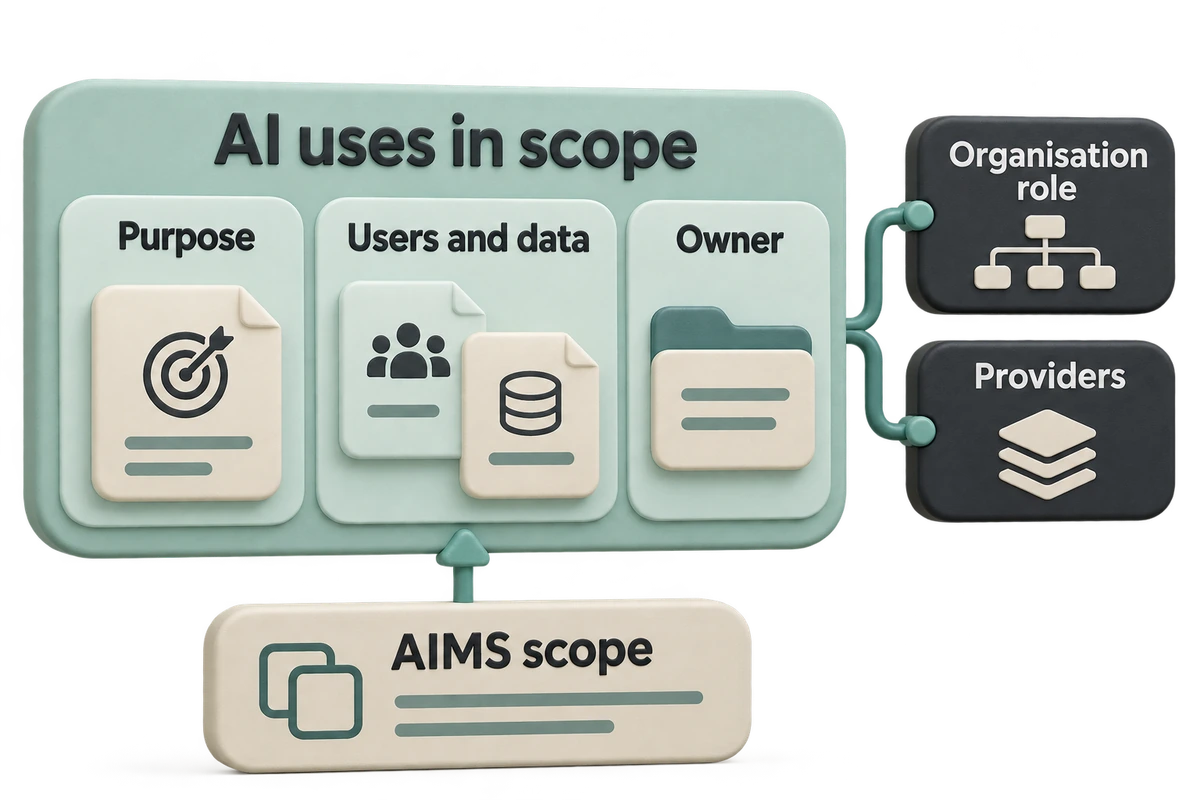
Clarify the intended AIMS scope and the AI uses relevant to it. Record the purpose of each use, the organisation’s role, the people involved and the information and suppliers on which it depends.

Identify who owns the use and who can approve governance decisions. Bring existing policies and records into the scope discussion, with missing information and specialist dependencies kept visible.

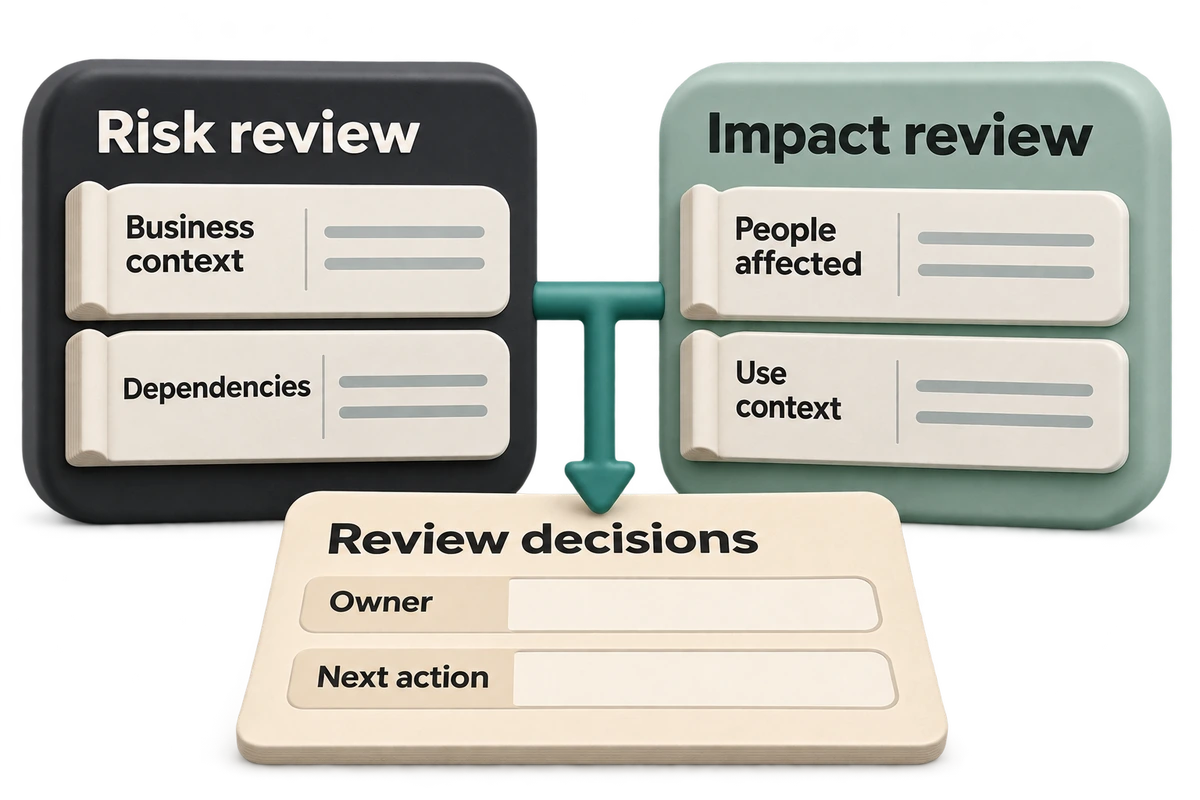
Organise risk and impact reviews

Organise AI policy, risk and impact assessment records around the relevant uses and the decisions management needs to make.

Review the information available, identify uncertainties and coordinate the people needed to examine the risks and potential effects of the AI use. Record agreed responsibilities and follow-up needs, with technical, legal or sector questions identified for the appropriate specialist input.

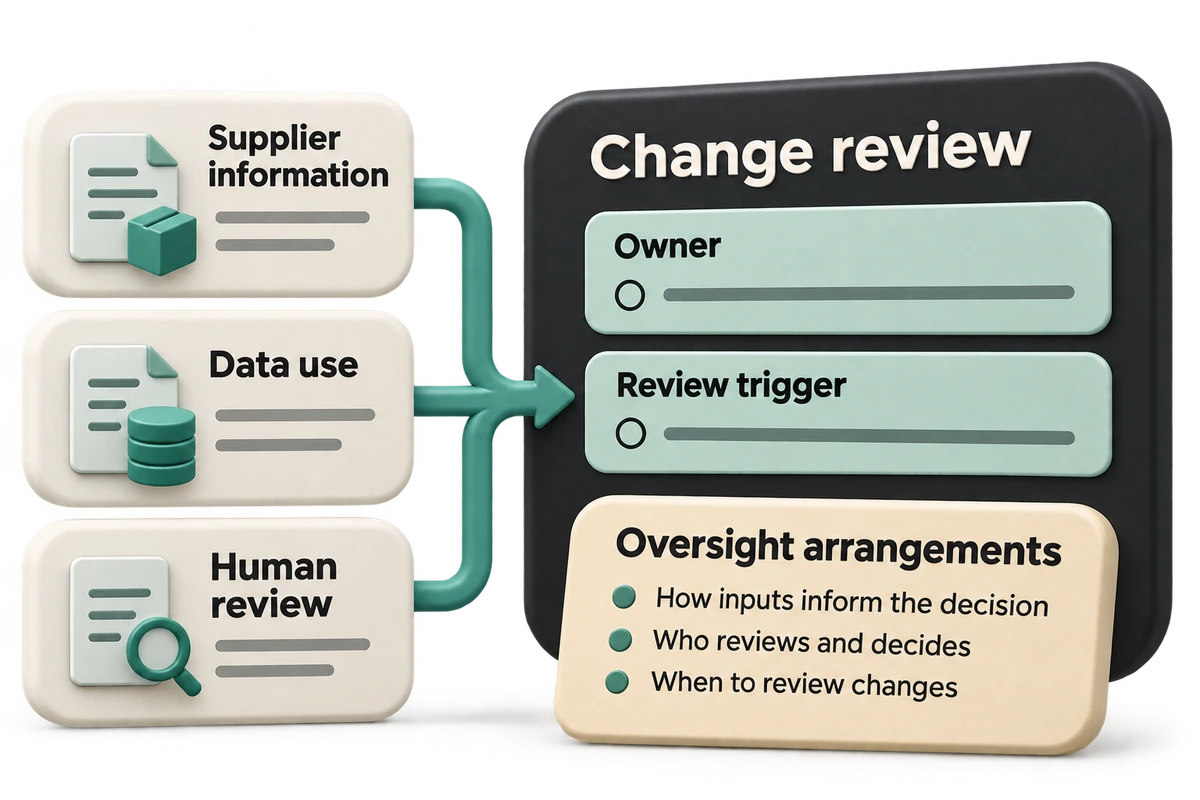
Make oversight and change reviews usable

Establish review activities for AI suppliers, information use, human oversight and changes. Make clear what needs reviewing, which records support the decision and who is responsible for acting on the result.

Document the agreed oversight arrangements and the points that trigger another review. Where a change affects purpose, data, providers or responsibilities, the governance records and decision needs can be revisited within the agreed scope.

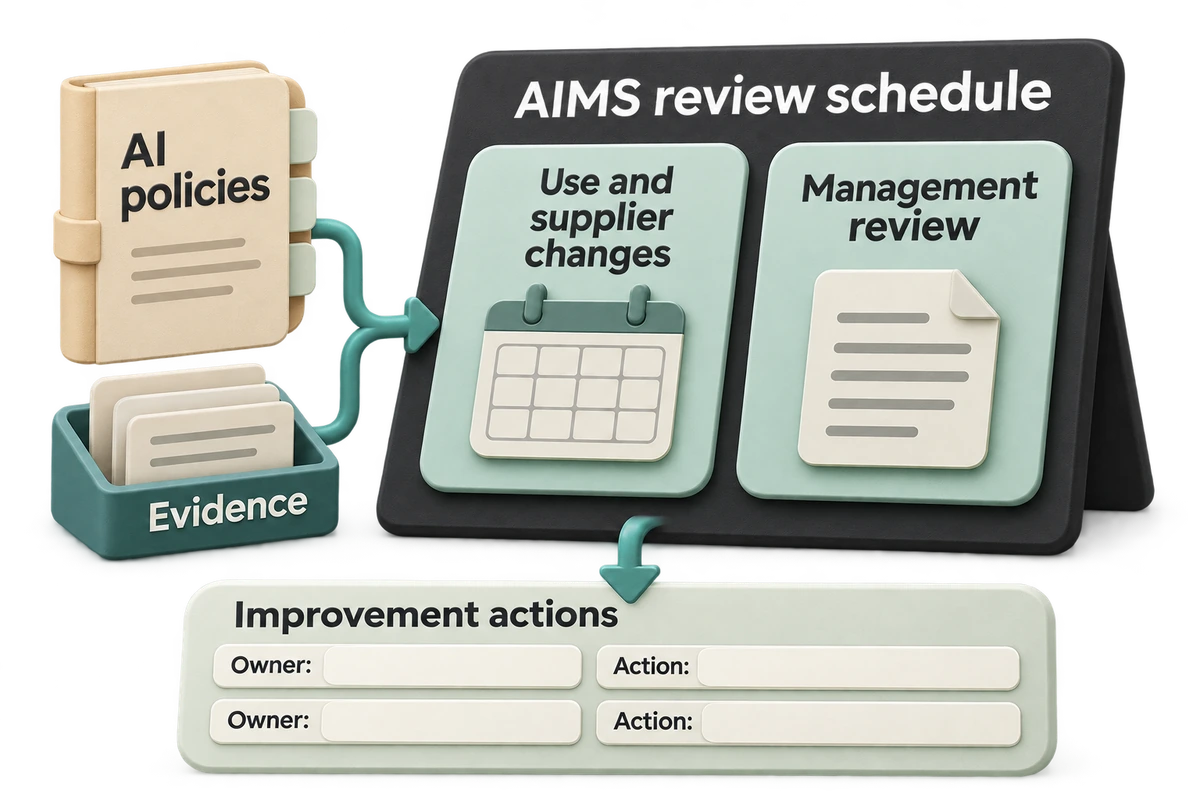
Keep the AIMS current

Coordinate evidence, management reviews and improvement actions so the system has an agreed rhythm of upkeep. Bring relevant owners and records together, track open decisions and prepare the information needed for the next review.

Support can cover initial readiness or ongoing administration of an established AIMS. Where independent certification is an objective, organise the agreed preparation and evidence, with the assessment and certification decision remaining with the certification body.

Know what needs a decision

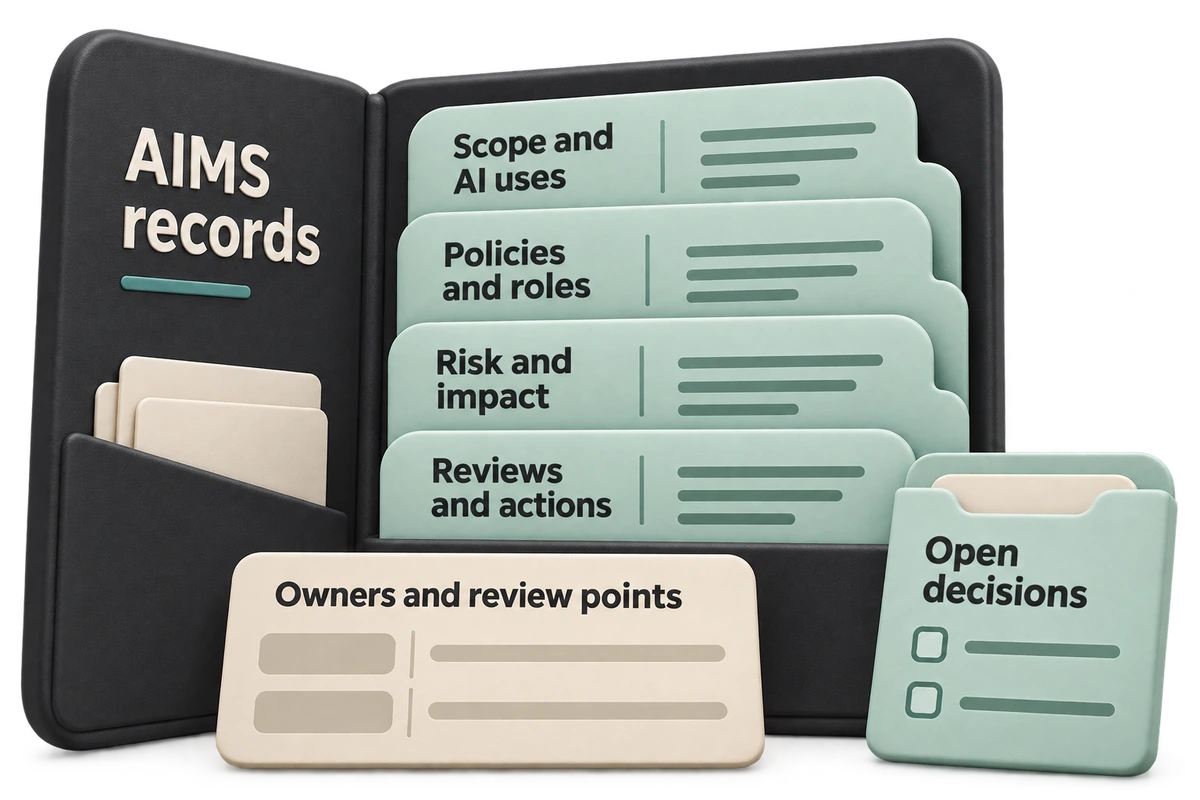
Receive the agreed AI management-system documentation, with a practical plan for reviewing it and keeping responsibilities current.

AIMS scope, AI uses and roles
An agreed view of the management-system boundary, relevant AI uses, organisational roles and governance responsibilities.
Policy, risk and impact records
The agreed AI policies and assessment records, with findings, uncertainties, decisions and approval needs made clear.
Oversight and review activities
A practical record of supplier, information-use, human-oversight and change reviews, with responsibilities identified.
A plan for keeping the AIMS current
Agreed review points, evidence needs and improvement actions for initial readiness or continuing administration.

The records distinguish agreed arrangements, information still needed and decisions awaiting management review.
Clear responsibilities from the start

Can you help with a new or existing AIMS?

Yes. The engagement can support establishing an AI management system, organising existing governance or administering an established AIMS.

The starting point is the relevant AI use, current arrangements and the outcome your organisation needs. The scope sets out the records, review activities and responsibilities included.

Which AI uses can the engagement cover?

The work starts with the AI uses relevant to your organisation and the role it plays, including whether it develops, provides or uses AI-based products or services.

The scope identifies the uses, information, suppliers and decisions to be reviewed. A focused engagement may cover selected uses, while broader AIMS work needs a correspondingly defined boundary and evidence base.

How do risk and impact reviews differ?

Risk review helps organise what could affect the organisation’s objectives and decisions about its AI use. Impact review considers the potential effects of that use on people, groups or other affected parties.

The use case, context and available information determine which questions need attention. The work organises those records and decision needs, identifying where specialist judgement or further evidence is required.

Who owns AI policies and governance decisions?

Management retains ownership of policies, approvals, risk decisions and the organisation’s AI use. Hemanth supports the governance records, reviews and coordination within the agreed scope.

Proposals, missing information and pending decisions remain visible until the appropriate people have reviewed them. Approval and completion are recorded when they have been confirmed.

What specialist work is included?

Scoping identifies any legal, model-testing, technical evaluation or sector-specific expertise needed. The engagement states which activities are included and which require a separate specialist owner.

Where that expertise is required, the role, access, outputs and responsibility need agreement before the work proceeds.

How does independent certification fit in?

Independent certification concerns the AI management system within the assessment scope. The certification body conducts its own assessment and makes the certification decision.

Individual AI systems and outputs still need the appropriate evaluation and oversight for their context. An AIMS certificate does not guarantee the safety or correctness of every output.

How is the work delivered and kept current?

You work directly with Hemanth. Remote delivery is the default, with meetings, working overlap and review dates agreed for the engagement.

Ongoing administration is scoped around the review cadence, included capacity, records and owners involved. Changes to AI uses, suppliers or responsibilities can inform the next agreed review and any additional work needed.

Let’s work through your AI priorities

Talk through your AI uses and agree a practical next step.