Hemanth Vishnu Advisory

Make privacy easier to manage

Map personal information, clarify who handles it and improve the records and processes behind everyday privacy decisions.

See the whole data journey

Privacy work starts with understanding how personal information moves through the business. Records become more useful when they connect the information with its purpose, the systems that hold it and the people responsible.

The engagement brings those facts into view and identifies where processes or controls need attention. It can help organise a starting point, improve existing records or prepare the information needed for a more focused assessment.

This service can help when:

  • Personal information is spread across systems and its journey is unclear
  • Processing records, retention arrangements or supplier information need updating
  • Access, sharing, deletion or privacy requests need clearer responsibilities
  • Your technical and legal advisers need better information for an assessment

Practical privacy support

Map the journey of personal data

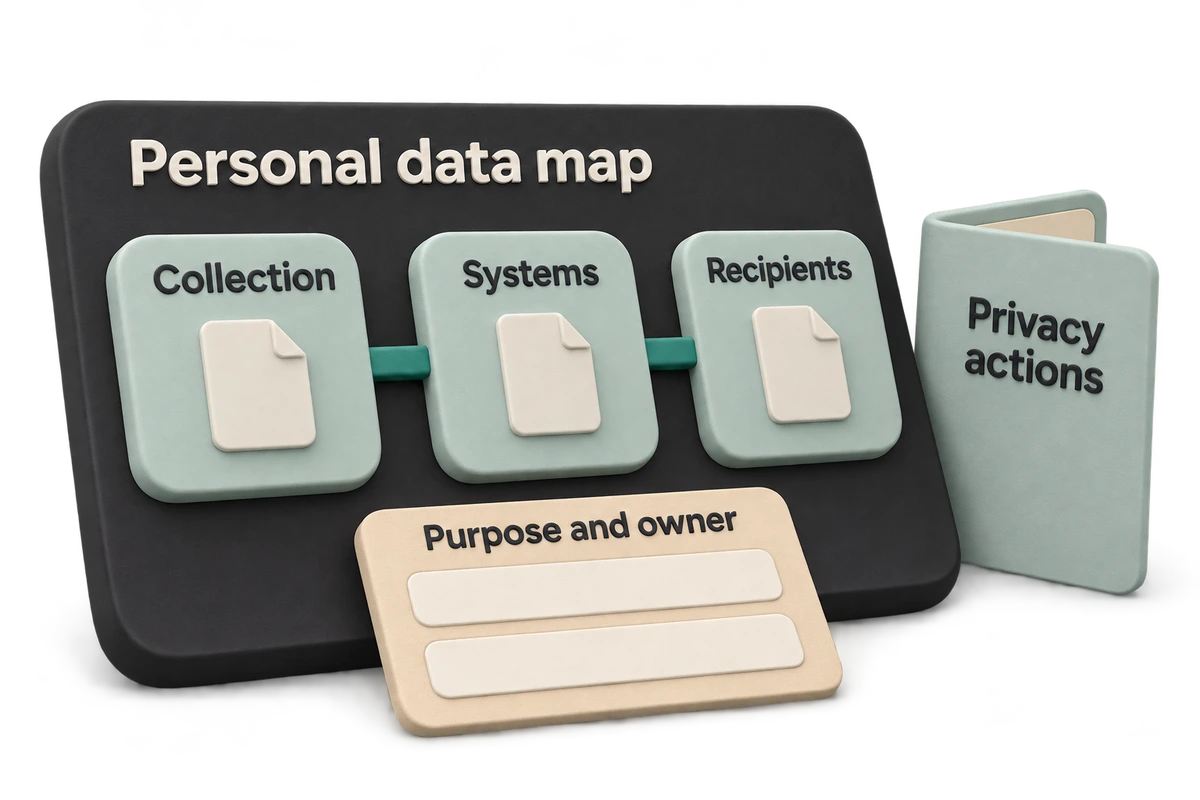
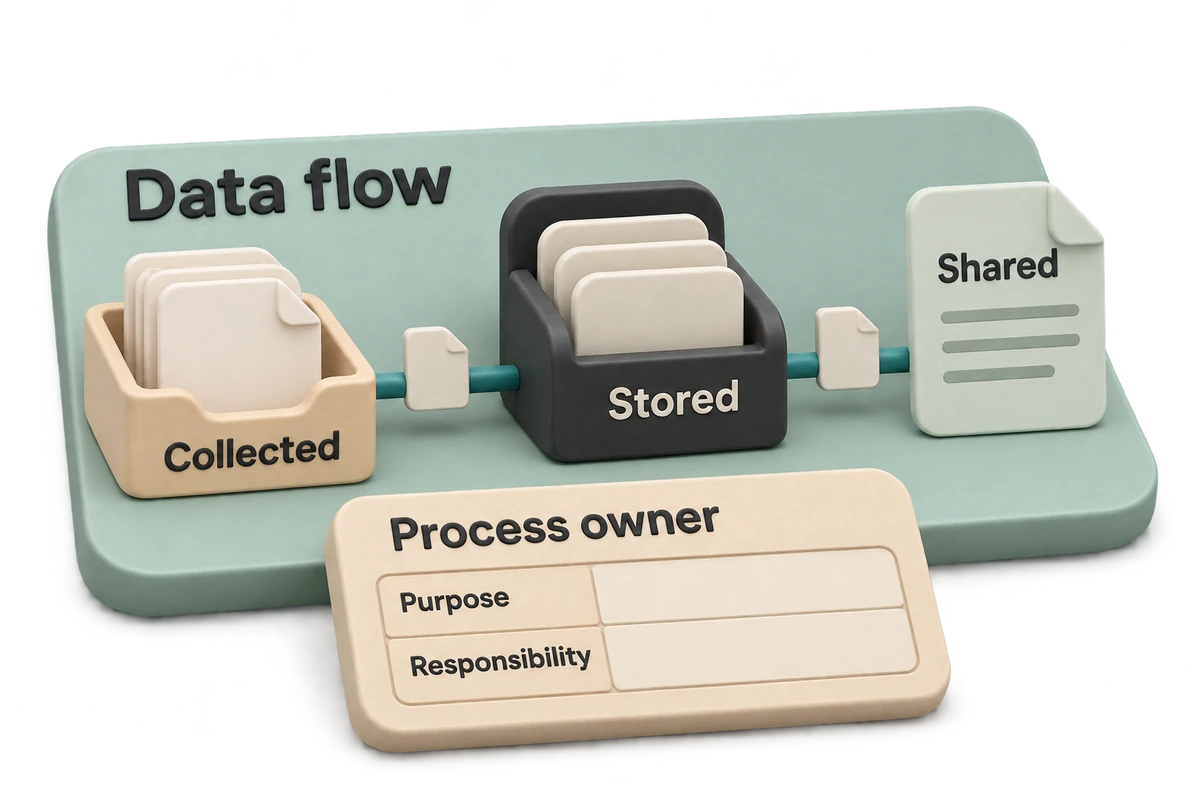
Start with the business activities in scope and follow the personal information through them. Identify what is collected, why it is used, where it is held, who receives it and who owns the process.

Connect the people, systems and recipients so the map reflects how the work happens. Discuss the available records with the relevant owners, recording confirmed facts separately from missing information and questions that need follow-up.
Bring your privacy records together

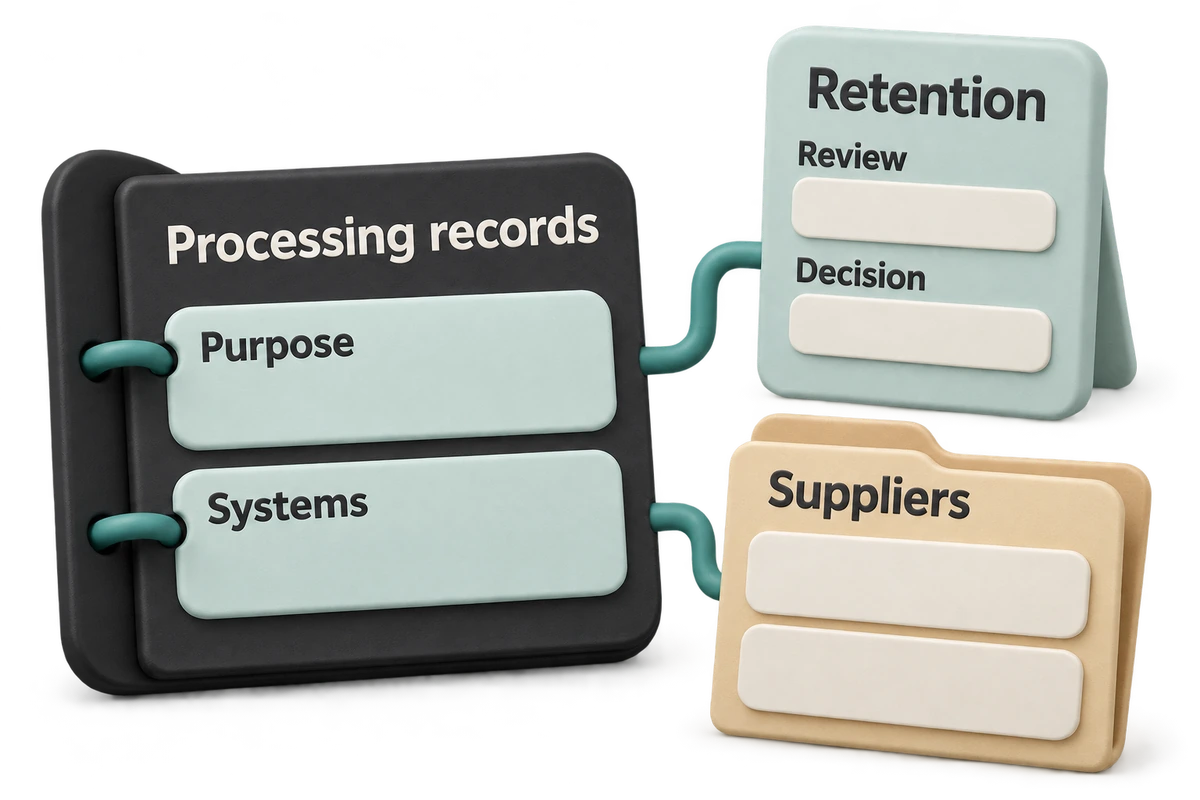
Organise the agreed processing records, retention arrangements and supplier information around the activities they describe. Keep the links between purpose, information, systems and responsibilities clear.

Review existing documents with the people who maintain them. Identify outdated entries, unclear retention decisions and gaps in supplier information. Record what needs updating or specialist review, with an owner for the next action.

Review everyday data handling

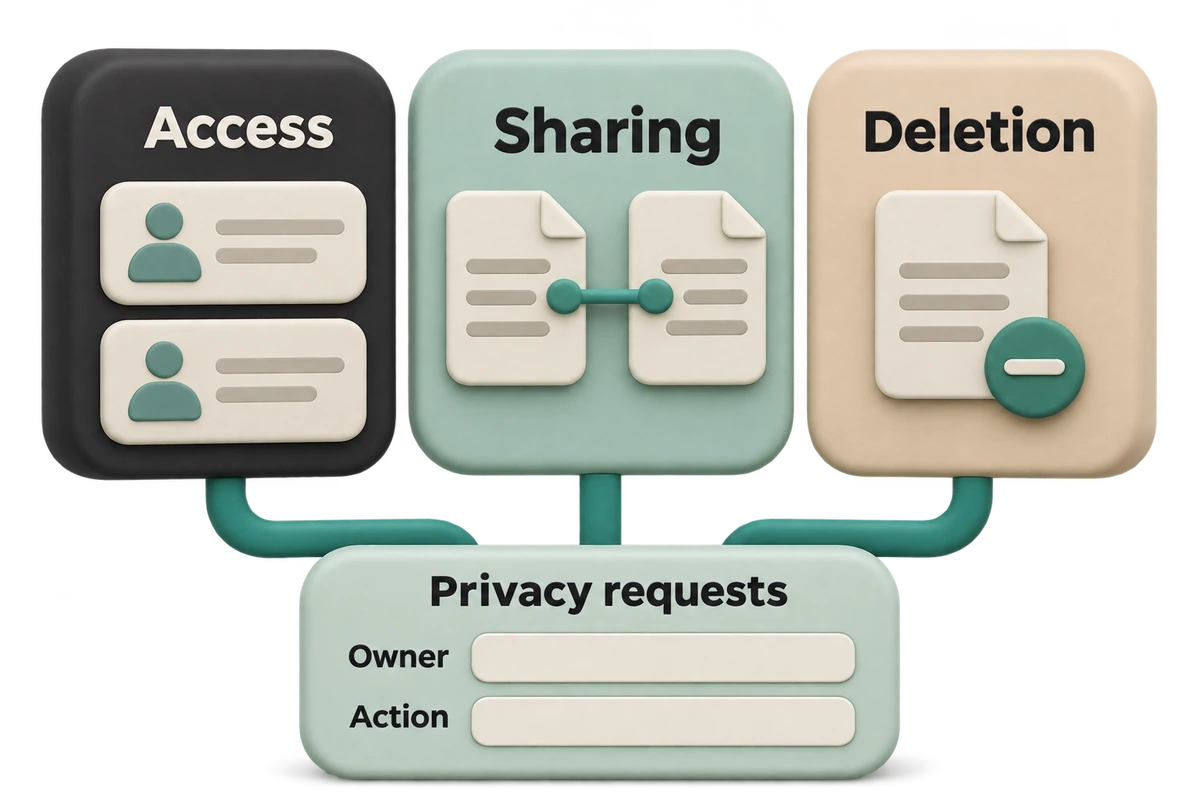
Look at how access is granted, information is shared and deletion is handled in the processes under review. Identify where the documented approach differs from day-to-day practice or where ownership is unclear.

Review how privacy requests reach the business, who coordinates them and where technical or legal input is needed. Document the agreed process and improvement actions so responsibilities are easier to follow across staff, systems and suppliers.

Prepare for privacy assessments

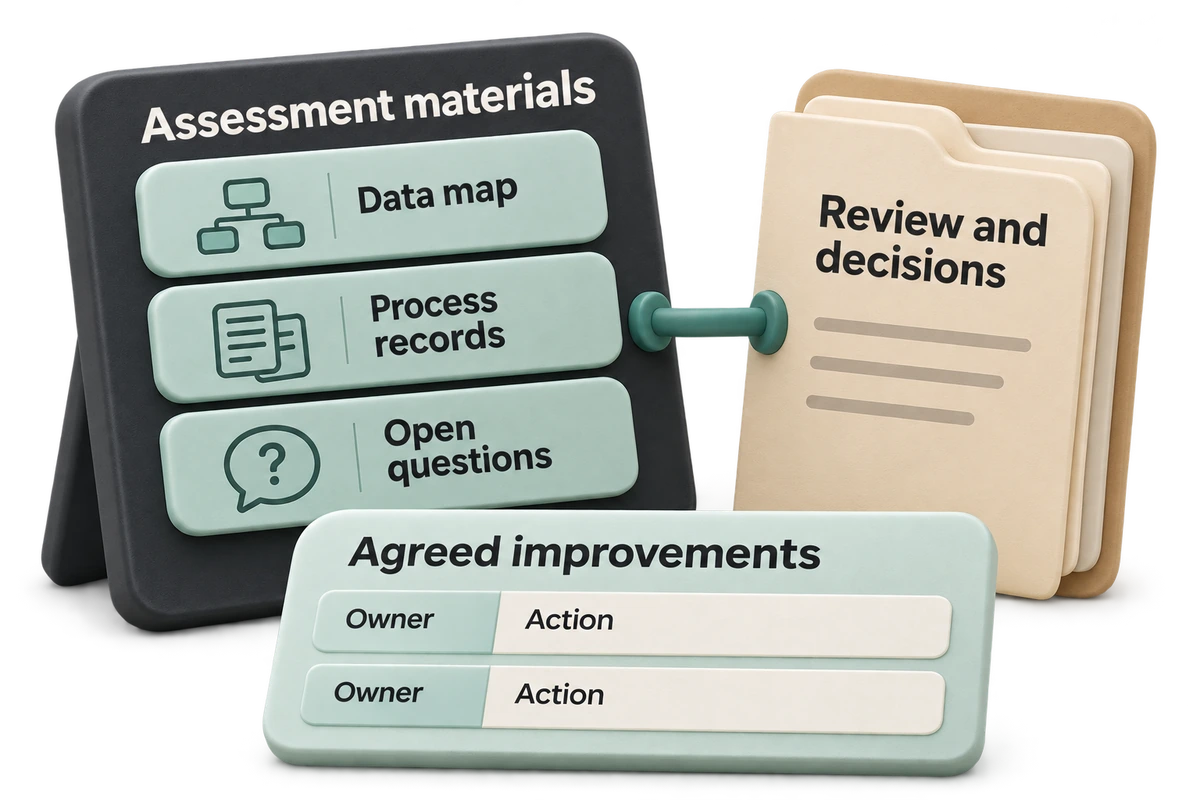
Bring data maps, process records, supplier information and open questions together for the agreed privacy assessment. Help your technical and legal advisers understand the activity, the available evidence and the points that need their judgement.

Coordinate practical improvements with the relevant owners and keep decisions, dependencies and follow-up actions visible. The work gives an assessment a clearer factual basis and your business a maintainable record of what needs to happen next.

Records your business can maintain

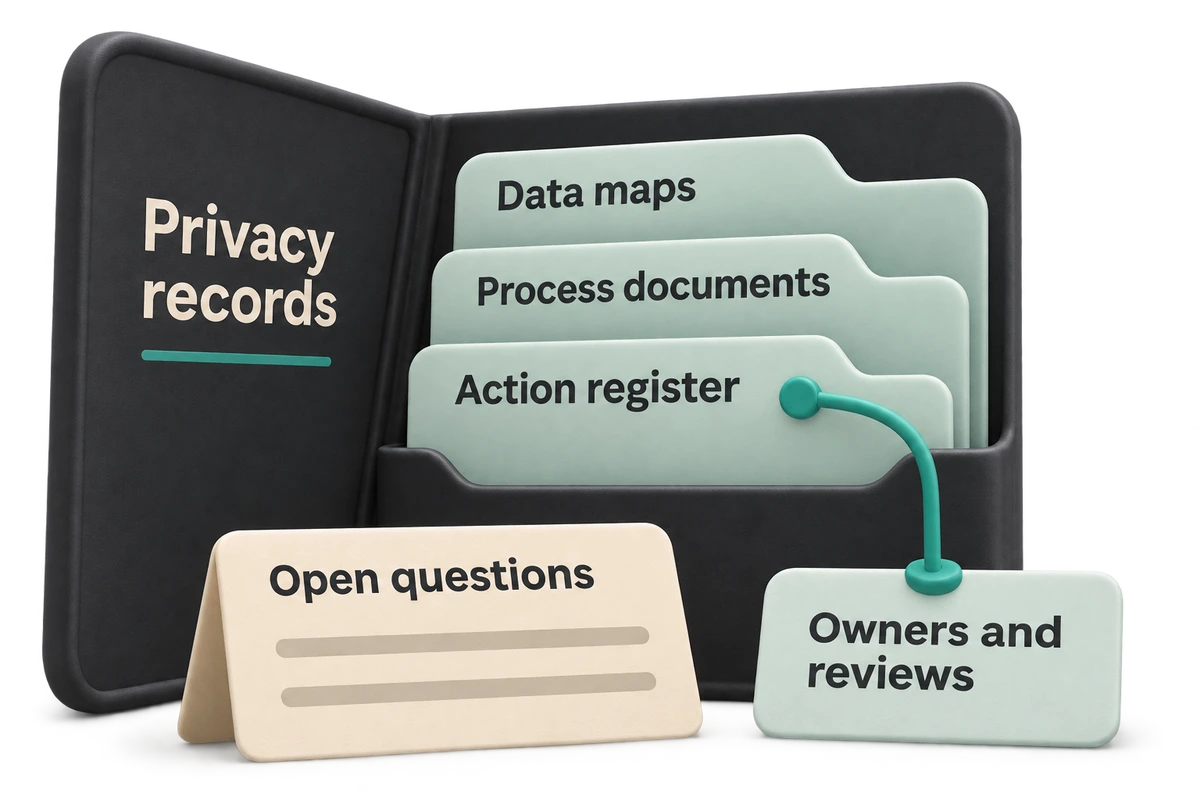
Receive the agreed maps, process documents and action register, with responsibilities and unanswered questions made clear.

Data maps connected to business activities
An agreed view of the personal information, purposes, systems, recipients and process owners within scope.
Privacy records and process documents
The agreed processing, retention and supplier records, with practical notes for the handling processes reviewed.
An action register with clear owners
Prioritised improvements and dependencies, showing who needs to act and which decisions require approval or specialist input.
Open questions and review responsibilities
A separate record of missing information, unresolved questions and ownership for keeping the documentation current.

The records give your business and its advisers a clearer basis for decisions and follow-up work.

Clear responsibilities from the start

Can we start with one process or system?

Yes. The engagement can focus on a defined activity, system or privacy concern, or cover a wider set of processing activities. The scope identifies the areas, people and records involved.

For example, mapping a customer enquiry process can help clarify the information collected, where it is stored and who receives it. The breadth of the work and the outputs are agreed around the question your business needs to answer.

What does a personal-data map show?

It connects a business activity with the personal information it uses, its purpose, the relevant systems and recipients, and the people responsible for the process.

The map is built from the information available and discussion with the relevant owners. Confirmed facts, missing details and questions for further review remain distinct, so an incomplete account is not treated as a verified picture.

Do you need copies of the personal information itself?

Mapping focuses on understanding the types of information, how they move and who handles them. Existing process descriptions, system information and discussions with owners can provide useful inputs.

What needs to be shared or accessed is agreed for the engagement. Where a record or example is needed, the purpose, appropriate level of detail and handling arrangements are discussed before it is provided.

Can you help with records we already maintain?

Yes. Existing data maps, processing records, retention arrangements and supplier information can form the starting point. The work can focus on bringing them up to date or addressing a particular gap.

Where practical, use the documentation your business can maintain. The handover identifies the owners and review needs, including which records may need revisiting when systems, recipients or business activities change.

How do assessments and practical improvements fit in?

The service can prepare assessment materials and coordinate improvements with your technical and legal advisers. Inputs may include the data map, relevant process records, supplier information and a clear list of questions.

The engagement states which materials, reviews and practical work are included. Your organisation approves decisions and changes, with specialist questions directed to the appropriate adviser.

Which jurisdictions does the engagement cover?

Scoping takes account of the processing activities, people, systems and jurisdictions involved. Those details determine the operational records and specialist input needed for the engagement.

Legal interpretations, statutory appointments and regulatory representation require separately agreed, appropriately qualified support.

How will we work together?

You work directly with Hemanth. Remote delivery is the default, with meetings, working overlap and review points agreed for the engagement.

The work depends on input from the people who understand the processes and systems involved. Your organisation retains responsibility for its privacy decisions and approvals; the agreed outputs make ownership and outstanding work clear.

Let’s make your next privacy step clearer

Talk through your privacy priorities and agree a practical next step.