Hemanth Vishnu Advisory

Give AI use clear direction

Set out where AI is used, who is responsible and how tools, information and decisions are reviewed.

Know how AI is being used

Practical AI governance connects the tools people use with their purpose, the information involved and the people accountable for decisions. It makes the arrangements for adoption, operation and change easier to understand.

The work can establish a starting point or improve existing governance. It can stand alone or provide useful records and responsibilities for a later ISO 42001 management-system programme.

This service can help when:

  • AI use is growing and responsibilities need clarifying
  • Staff need clearer guidance on tools and information use
  • Supplier information or oversight arrangements need review
  • You need practical governance before considering a wider management system

Practical AI oversight

Map the AI uses that matter

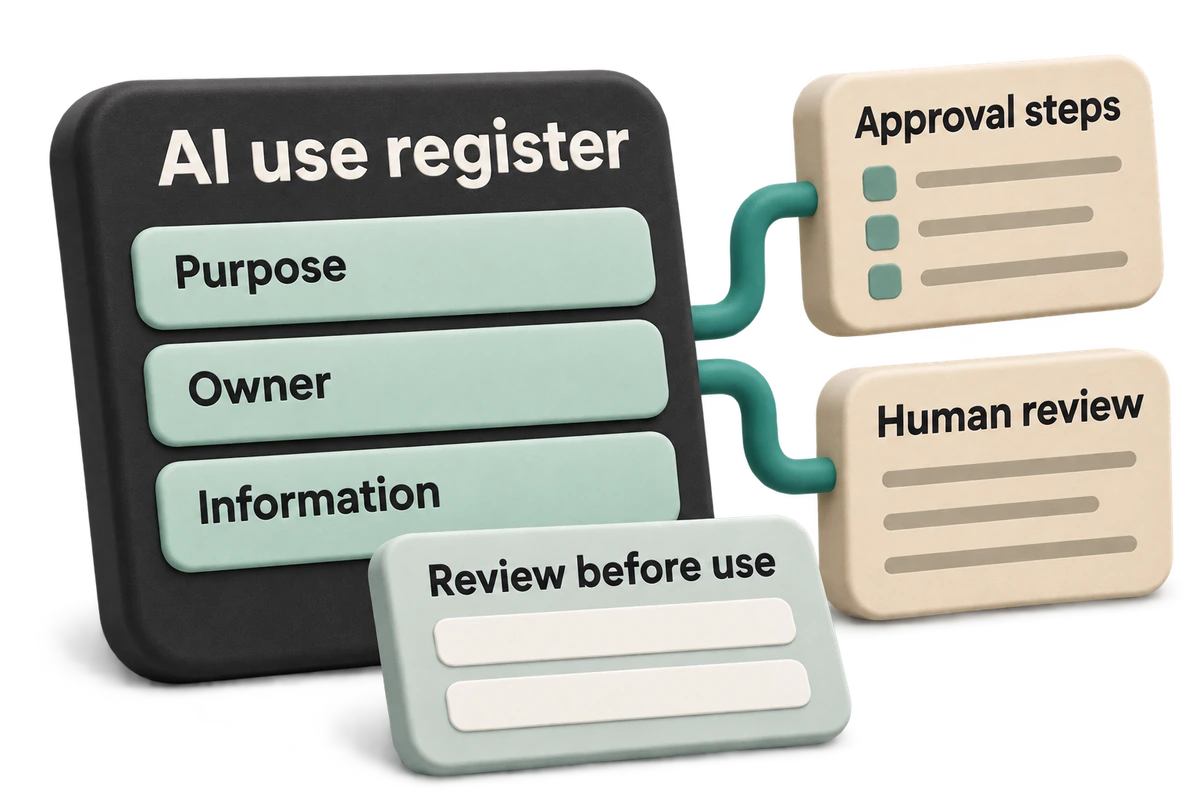
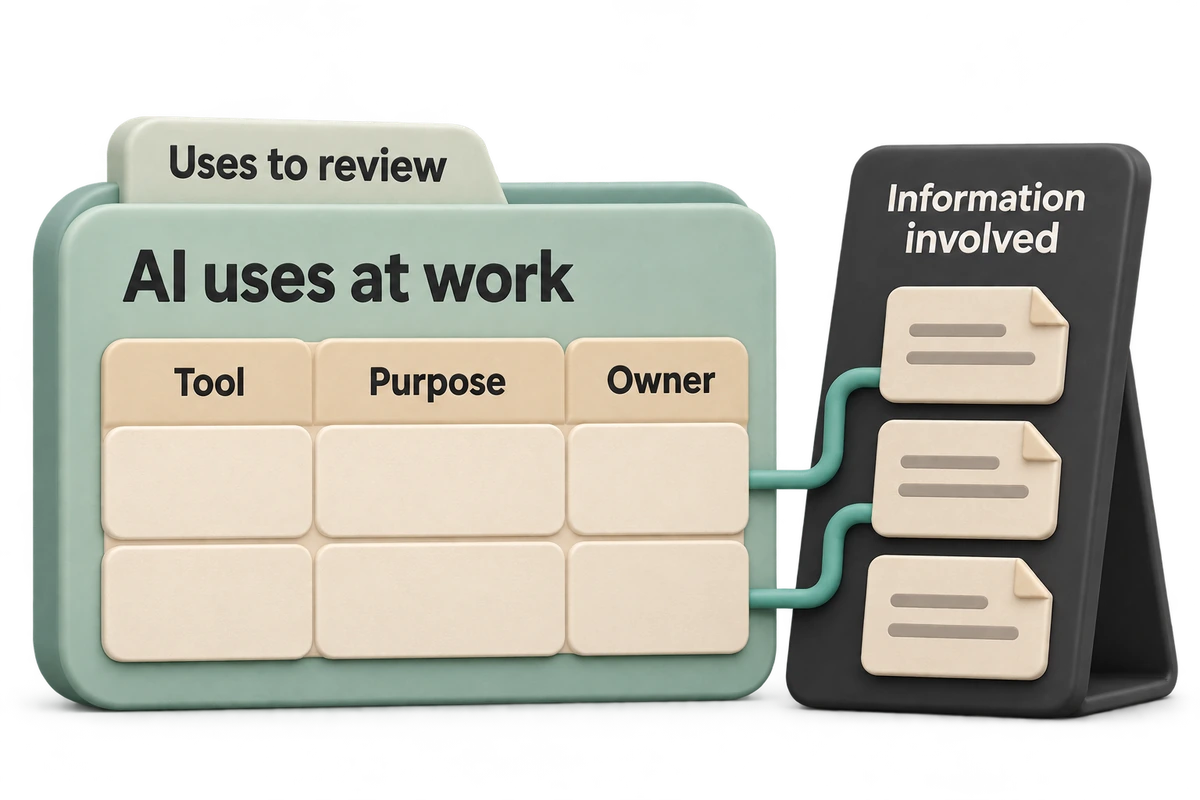
Build a register of the tools and use cases within scope, including relevant current and planned uses. Give each use a purpose, an accountable owner and a record of the information involved.

Connect the tool with the work it supports and the people responsible for it. Record what is known, which details need confirmation and which uses need closer review, so decisions start from a shared picture of AI across the agreed areas.
Set clear guidance and approval steps

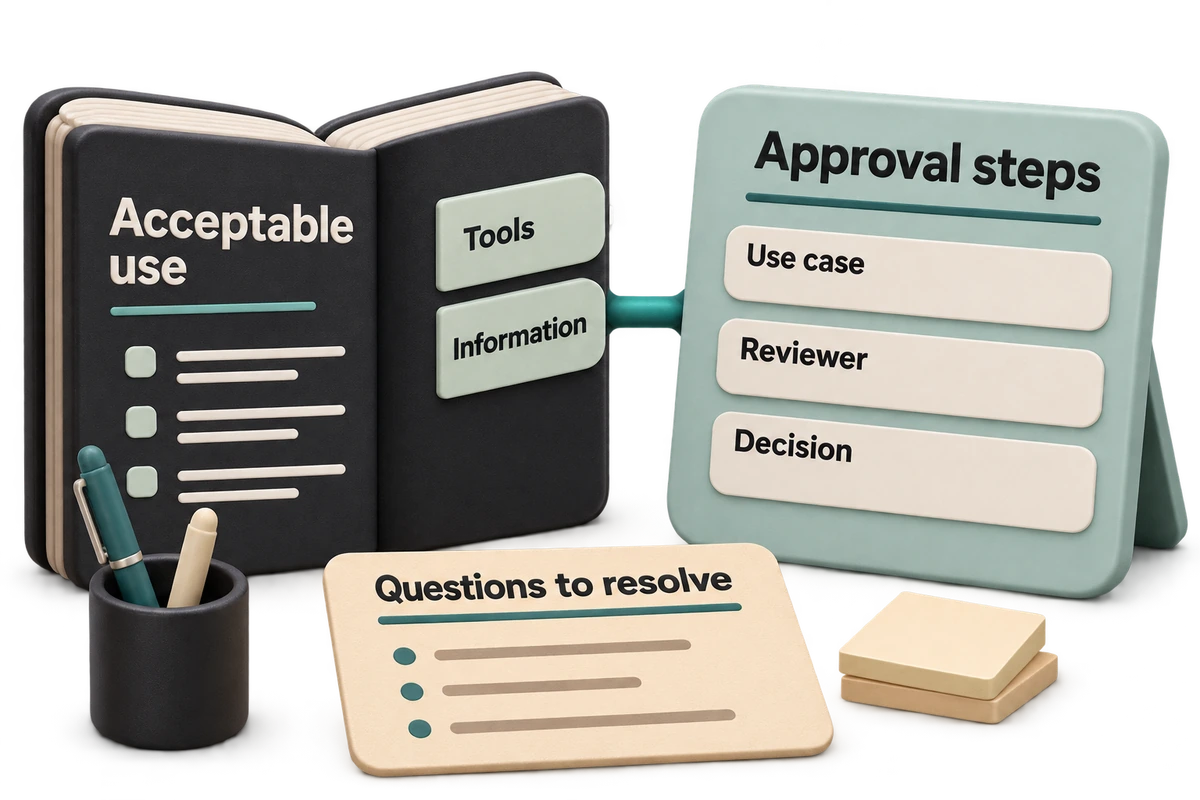
Develop acceptable-use guidance around the tools, information and activities your business needs to oversee. Make clear which uses need approval, who can make that decision and what information they need before agreeing a new tool or use case.

Document the boundaries and questions that staff need to recognise in everyday work. Your organisation approves the guidance and decisions; unresolved issues remain visible for the appropriate technical, legal or business review.

Clarify human review and escalation

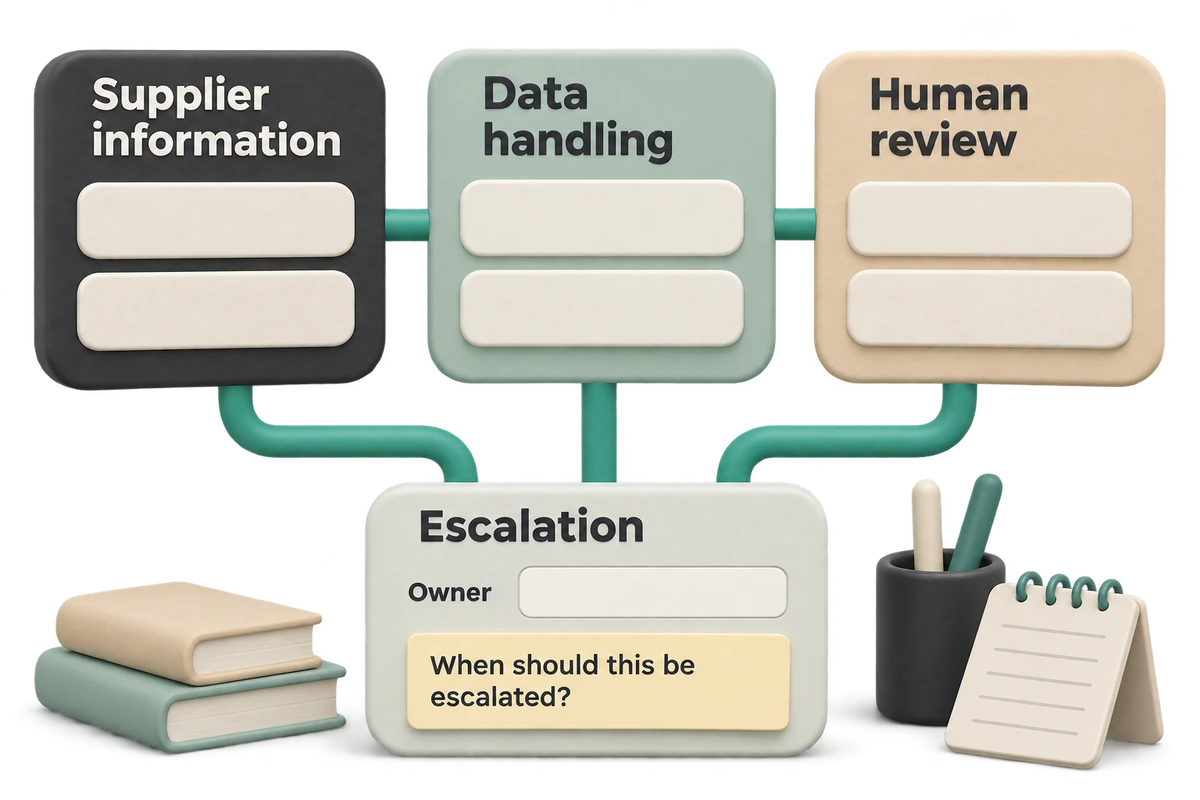
Review the supplier information and data-handling arrangements relevant to the agreed uses. Identify what is understood about the service, the information involved and the responsibilities that need clarification.

Set out the agreed human-oversight and escalation arrangements: who reviews the use or output, what needs attention and where questions go when they cannot be resolved. Identify where specialist judgement or further evaluation is needed for the context.

Keep guidance and reviews current

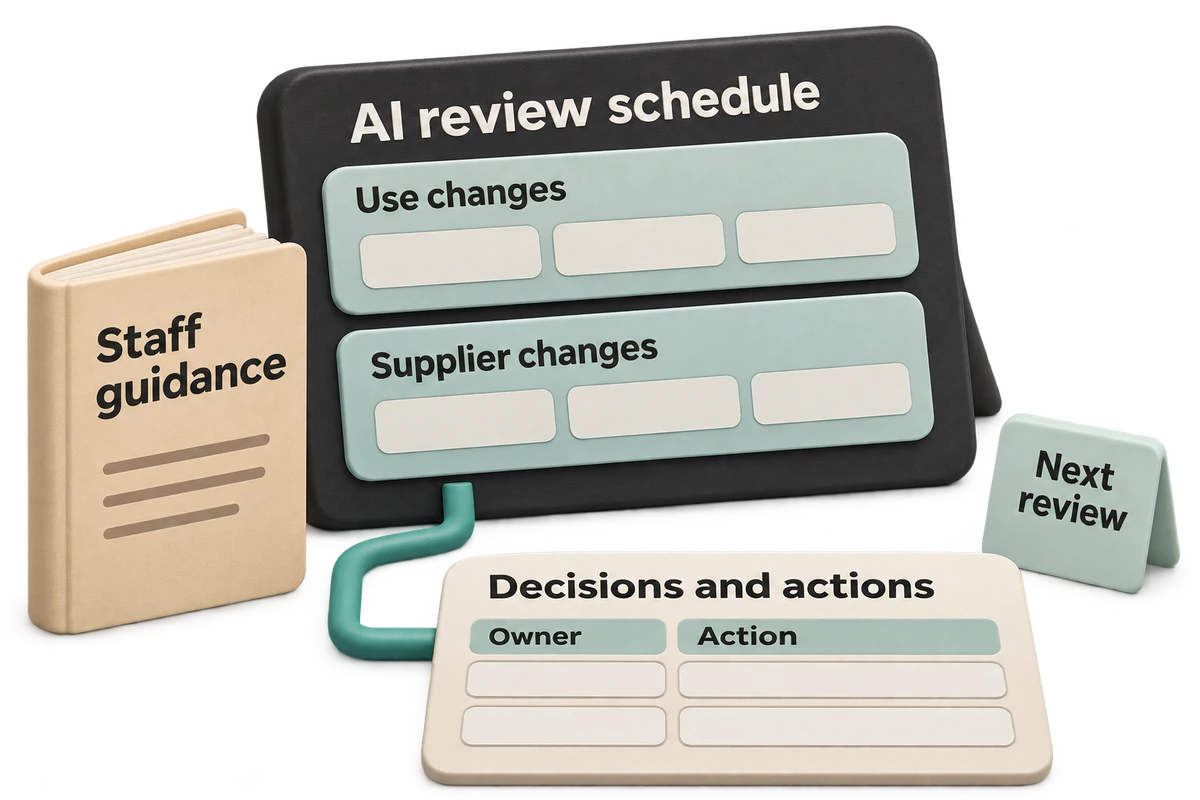
Organise the risk questions, staff guidance and decisions into a practical set of actions. Identify the responsible owners and agree review points for adoption, operation and changes to the tools or use cases.

Changes to purpose, information, suppliers or responsibilities can create new questions. Give the business a schedule and a clear basis for revisiting the relevant records, rather than treating the initial guidance as a finished task.

Governance people can work with

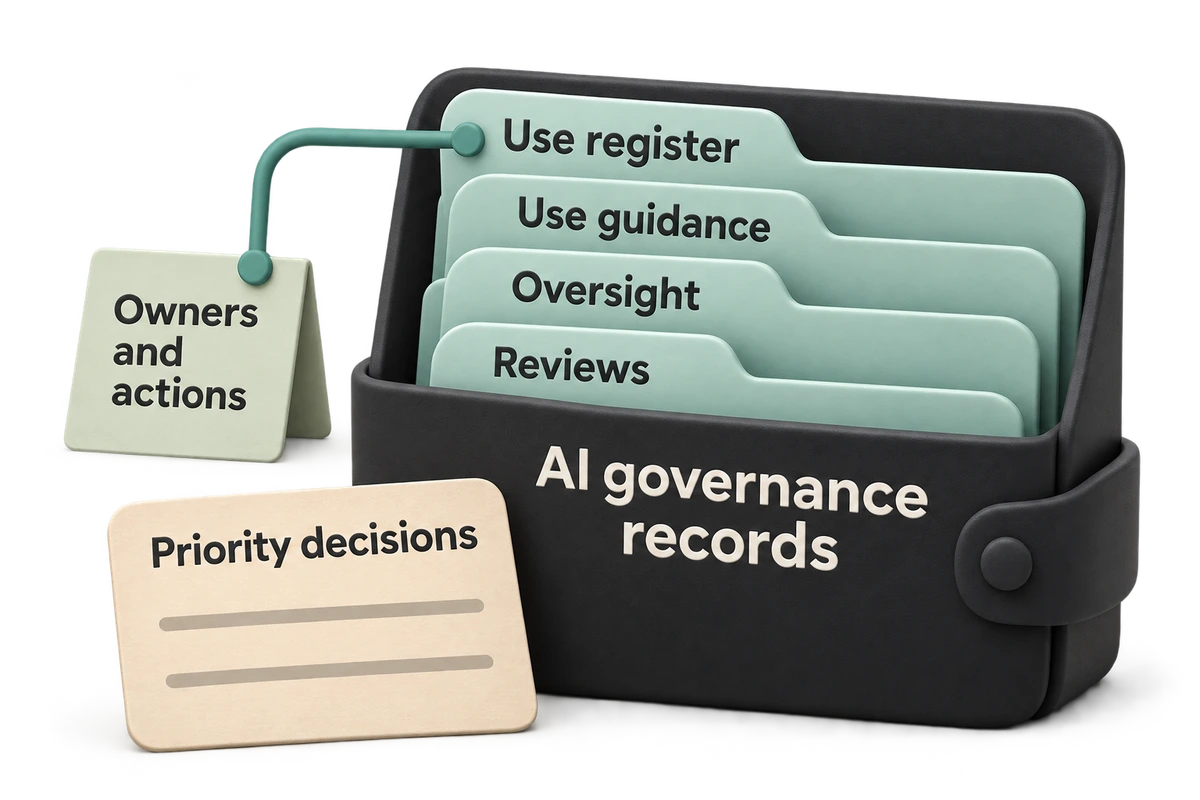
Receive the agreed governance records and a prioritised set of decisions and actions for the AI uses in scope.

An AI use-case register
The agreed tools and uses, with owners, purposes, information involved and questions needing review.
Use guidance and approval steps
Practical acceptable-use guidance and an agreed route for reviewing tools, use cases and decisions.
Oversight and escalation arrangements
A record of supplier and data-handling questions, human-review responsibilities and the route for further input.
Priority decisions and a review plan
The agreed risk questions, staff guidance, actions and review points, with clear ownership for keeping records current.

The records keep agreed arrangements, missing information and decisions awaiting approval distinct.

Clear responsibilities from the start

Can we start with selected AI tools or use cases?

Yes. The work can focus on specific current or planned uses, or bring a wider set of AI activities into view. The scope identifies the tools, business activities, people and decisions involved.

The starting point can be an existing register, staff guidance or a particular adoption decision. The engagement sets out which records and review arrangements need to be developed or improved.

What guidance will staff receive?

The agreed guidance explains acceptable use, information boundaries, approval steps and where to raise questions. It is organised around the activities and tools within scope, so staff can connect it with their work.

Your organisation reviews and approves the guidance. Questions requiring technical, legal or other specialist input are identified so that an unresolved issue is not presented as an approved instruction.

What if supplier information is incomplete?

The review records the available supplier information and identifies the questions relevant to the intended use and data handling. Missing details and unclear responsibilities remain visible.

The appropriate owners can then seek clarification, arrange specialist input or decide what needs resolving before the use proceeds. The governance records distinguish known arrangements from assumptions and pending decisions.

How does this differ from ISO 42001 support?

AI governance advisory can stand on its own. It focuses on practical oversight of the tools and use cases your business needs to manage, with a register, guidance, responsibilities and review arrangements.

ISO 42001 support addresses the wider work of establishing or maintaining an AI management system. The governance records developed here can support a later programme, with its scope and additional work agreed separately.

How does human review fit into the work?

The engagement helps make the review responsibility and escalation route explicit for the agreed uses. The level and type of review depend on the activity, the information involved and the decisions people are making.

Governance support does not validate every model output or replace accountable human judgement. Where a use needs technical evaluation or specialist review, that expertise and its responsibility need to be agreed.

Which specialist expertise might be needed?

Scoping identifies questions that need legal interpretation, model testing, sector knowledge or other specialist judgement. High-impact decisions need the appropriate expertise and accountable human review for their context.

The engagement makes clear which activities are included, which decisions belong to your organisation and where a separate specialist owner is needed.

How will we work together and keep the records current?

You work directly with Hemanth. Remote delivery is the default, with meetings, working overlap and review points agreed for the engagement.

Your organisation owns AI adoption and use decisions, approvals and the responsibilities assigned to its people. The handover identifies the records, actions and review schedule, with any further support agreed around that scope.

Let’s bring clarity to your AI use

Talk through your AI priorities and agree a practical next step.